Climb Ojos del Salado, 6893m
At a height of 6893m, Mount Ojos del Salado is the highest mountain in Chile and also the highest active volcano in the world. This expedition gives a great opportunity to climb high with little technical difficulty apart from the summit rock tower, which is 30m of challenging climbing with a fixed rope in place, and a gradual acclimatization programme which gives everyone a good opportunity of reaching the summit.
Overview of the Climb of Ojos del Salado, Chile
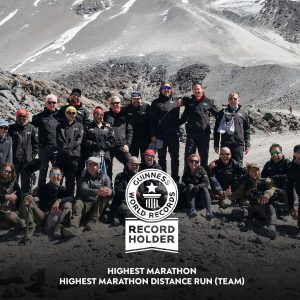 At a height of 6893m, Mount Ojos del Salado is the highest mountain in Chile and also the highest active volcano in the world. We run one guided trip to Ojos del Salado each year and can also accommodate additional private climbs for groups of people. We and our local teams have years of experience on Ojos del Salado. We are also proud of holding two official Guinness World Records for the ‘Highest Marathon’ and ‘Highest Marathon Distance Run (Team)’ which were both set on Ojos del Salado.
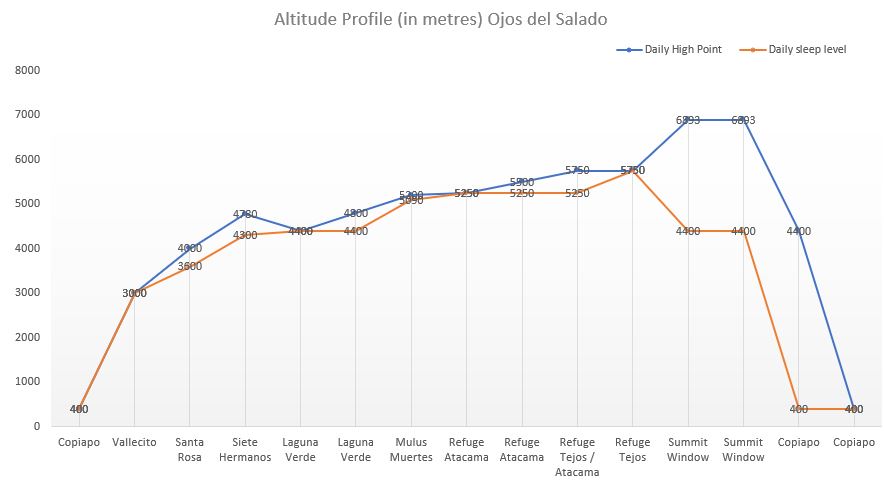
We start with a drive from the mining town of Copiapo to the Lagunas below the mountain, from here we do a number of acclimatisation hikes before ascending to the base camp; we then ascend to our high camp (in a hut) just before summit day.
Ojos del Salado is normally climbed from December to late March. It´s the warmest period in the southern hemisphere, but it’s still windy and dry and conditions can be quite rough also during peak season. There’s a good summary of the mountain on summitpost for more information.
This expedition gives a great opportunity to climb high with little technical difficulty apart from the summit rock tower.
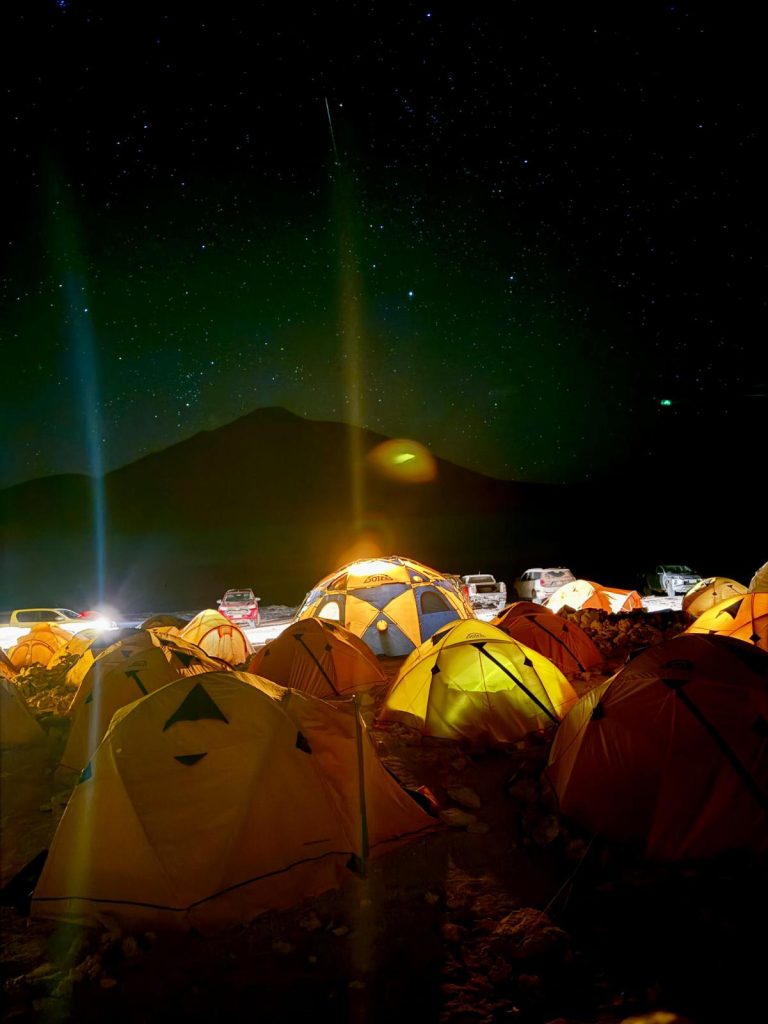
The main issues are cold and wind, high altitude and sometimes difficult terrain (ice and snow) but there are few objective dangers. It is a very long and demanding summit day and the final section to the top involves a scramble on rock where there are some ropes and chains to assist. This volcano is far less busy than Aconcagua and the dramatic landscape of desert, Lagunas and ice capped volcanoes make for a special expedition.
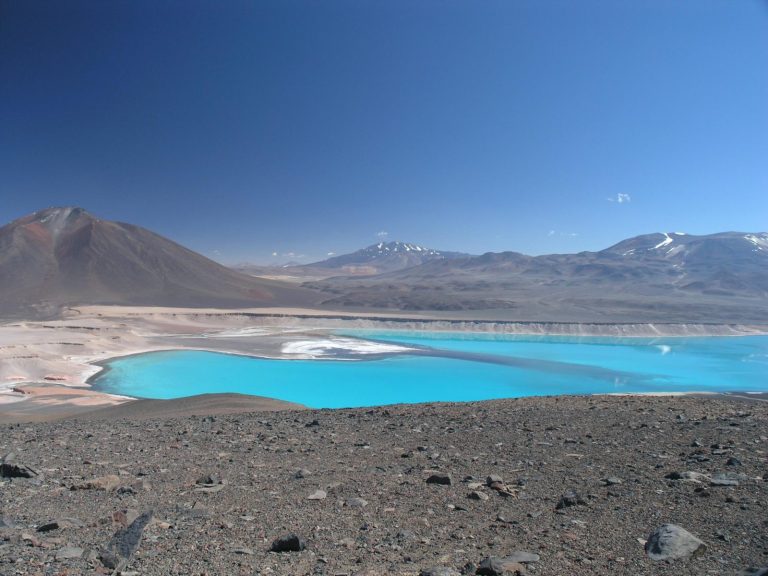
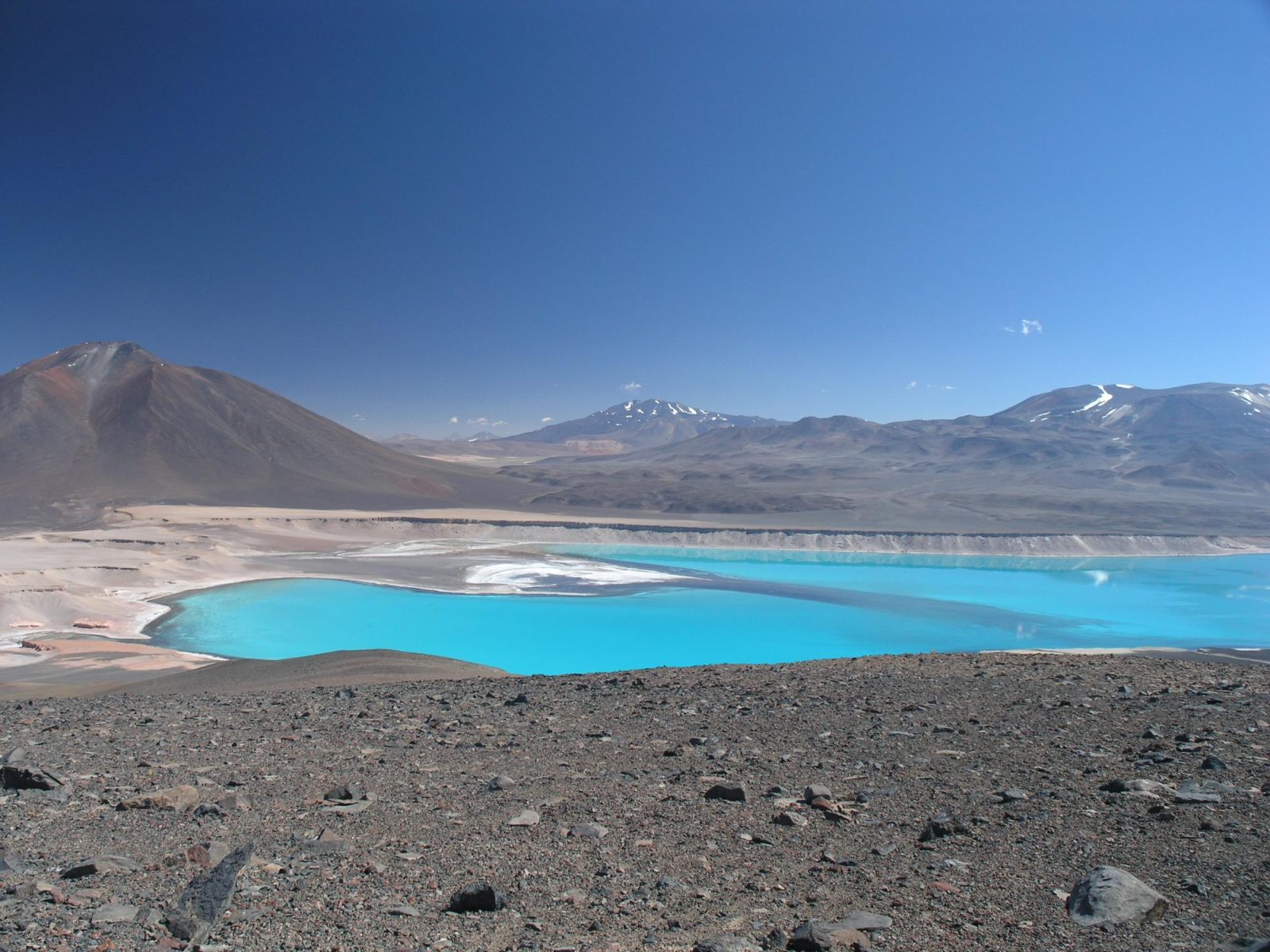
The volcano is located in a unique desert environment of intense, deep, green lagoons contrasting with the colour of the desert and snow covered volcanoes above. At these lagoons its possible to see flocks of flamingos, horny coots, and many ducks, foxes and guanacos which have adapted to survive in this environment, with night time temperatures reaching – 25 c.
Our expedition is self-contained, driving our own 4×4 land cruisers through the Atacama Desert to reach the volcano. The distance to the mountain from Copiapo is not that great, a few hundred kilometres, but we take several days to get there and appreciate the change in scenery We use a local company for base camp services at Laguna Verde. From Laguna Verde the start of the summit climb is a few hours drive on dirt roads.


Mount Ojos del Salado itinerary
Summary of Mount Ojos del Salado itinerary:
- Arrival and Copiapo (day 1)
- 4×4 travel into the Atacama (days 2-5) – Don Juan, Laguna Santa Rosa, Laguna Verde
- Acclimatisation treks from Laguna Verde (days 6-10)
- Main peak climb (days 11-12)
- 4×4 transfer to Bahía Inglesa & travel home (days 13-14)
The itinerary described below is a guideline only. Please be aware and appreciate that some changes may occur during the expedition due to inclement weather or group issues. The head-guide has the right to adapt the itinerary as required to ensure the best interests of the group and their safety.

Arrive in Copiapo, either by connecting flights or by bus. Copiapo is a small mining town on the edge of the Atacama Desert. We use a local hotel in town, and take a rest day for jetlag, alongside some shopping and sorting out personal equipment and clothing.
After a relaxing morning, we’ll load up our vehicles and head to the first higher altitude camp at Don Juan at 2500m. Our 105km drive take around 2.5/3hrs. This place is perfect to start our expedition in terms of altitude and environmental introductions. Don Juan is what is known as a community camp, a sort of sleep over place, halfway between Copiapo and Laguna Santa Rosa. The altitude (2500m) is perfect for acclimatisation. The place takes its name from an old goldsmith who lived in the nearby mountains. We can go for a short walk to stretch our legs and enjoy the selenite-filled landscape of the Salt mountains. The area features colas de zorro (“foxtail”), a species of grass known for its tall, feathery plumes that resemble the tails of foxes, and one of the few food plants that goats and sheep eat.
Camping will be under canvas, or if conditions allow, under the stars with just sleeping mats, sleeping bag and a bivi bag. It does get very cold in the desert environment so having a good quality bag will be important.
Then we drive further into the desert and over two passes over 4000m to reach the laguna at Santa Rosa which is at an altitude of 3760m. The laguna is situated in the Nevado Tres Cruces National Park and it’s a beautiful spot and a wetland area of International Importance with over 40 species of birds including the famous Andean flamingoes, Andean Geese and mammals such as fox and guanacos, and a wide variety of bushes and plants of the high Andes.
The sunsets here are extraordinary and we will spend two nights acclimatising and enjoy some walks through this unique environment. There is a small hut that accommodates up to six people but we would intend to again camp under the stars.
Depending on how people feel we use this day, in such a beautiful setting, to go on a hike and gain some altitude before coming back to Santa Rose to sleep again. This will be important for our acclimatisation.
One option is to trek to Siete Hermanos at 4950m. It takes about 4 hours to the summit, initially on a good trail then steeper and more rocky ground. From the top stupendous views of our journey into the desert ahead and the lagoon below. Another option is the nearby Cerro Pastilidos which is just over 5000m and is again quite a tough challenge at that altitude and with the cold desert wind, or perhaps Ocho Patos which is 4900m. The intention is to be flexible and concentrate on keeping healthy and promoting good acclimatisation.
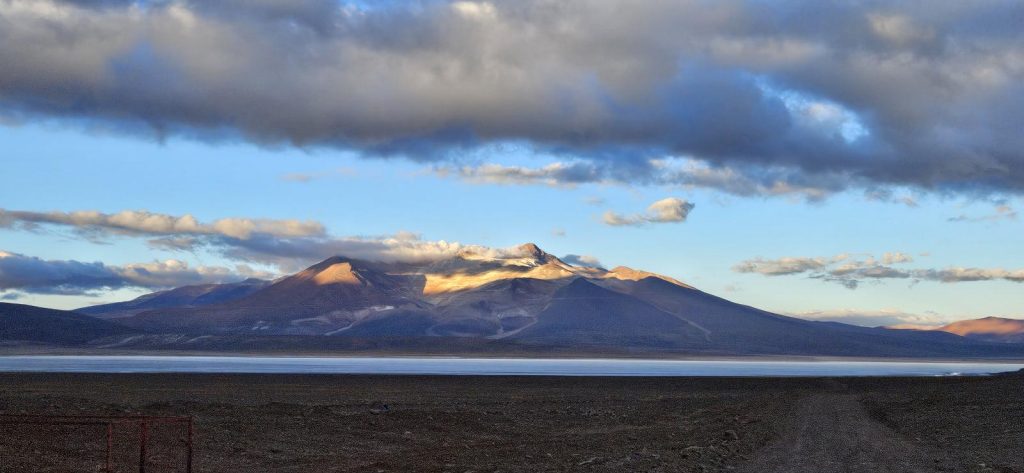
This laguna is in a spectacular setting deep in Tres Cruces national park. Just before arriving we get our first view of Ojos Del Salado and an idea of what type of conditions we can expect on the volcano.
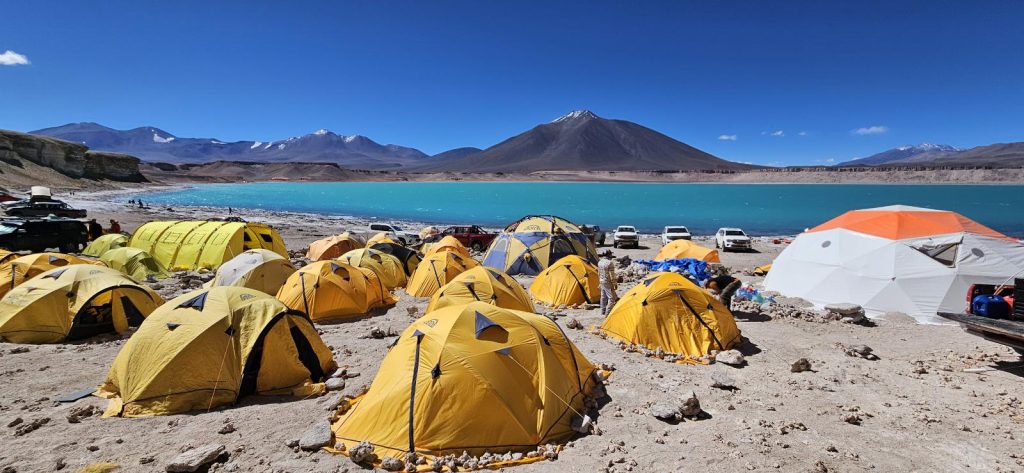
We camp next to the lagoon where there are hot pools to bathe in, surrounded by an intense green lagoon and surrounded by snow-clad volcanoes including Tres Cruces at 6753m. Local companies use the beach around the laguna to set up base camp services for climbing expeditons, so there will be a mess tent, toilets and facilities for us to use. The climate here is extreme – very hot or very cold, and very windy – so it’s vital to really look after yourself and protect your skin and eyes especially.
The drive from Santa Rose takes a good half day so we will settle in and relax, eat and drink and try to sleep well.
The aim is to rest, but also gain a little altitude and trek with only daypacks around Laguna Verde. Then plenty of time to sort through kit and supplies. We’ll then sleep again at Laguna Verde.
We will attempt to trek from the campsite to Mulus Muertes 5910m, and see how people feel. Sometimes the wind is so strong it’s not possible to get onto the summit, but there are wonderful views of the summit ridge of Ojos Del Salado and a vista of mountains and volcanoes stretching into Argentina. The route starts from the camp but the summit is actually a long way and the elevation gain is 1700 meters/5600 feet so getting to the summit involves a long traverse at high altitude. There’s a very good SummitPost description.
Added to that , this is such an inhospitable environment that it will be very important not to push it with our bodies. The aim is to acclimatise and maintain high levels of hydration, calorie intake and good sleep. All of these become difficult at high altitude.
To build upon our acclimatisation and in turn invest in our expedition success and preparation, we ascend Barrancas Blancas (6072m) and check how our body reacts when facing that kind of altitude, before retuning to camp.
This will be the last rest day before attempting the summit of Ojos so it will be important to use this day for maximum rest and hydration. We’ll check our gear and you can enjoy the hot springs near the camp. We’ll be watching the weather to see which of the days are best to go to the top, because wind and cold are significant issues on the climb.
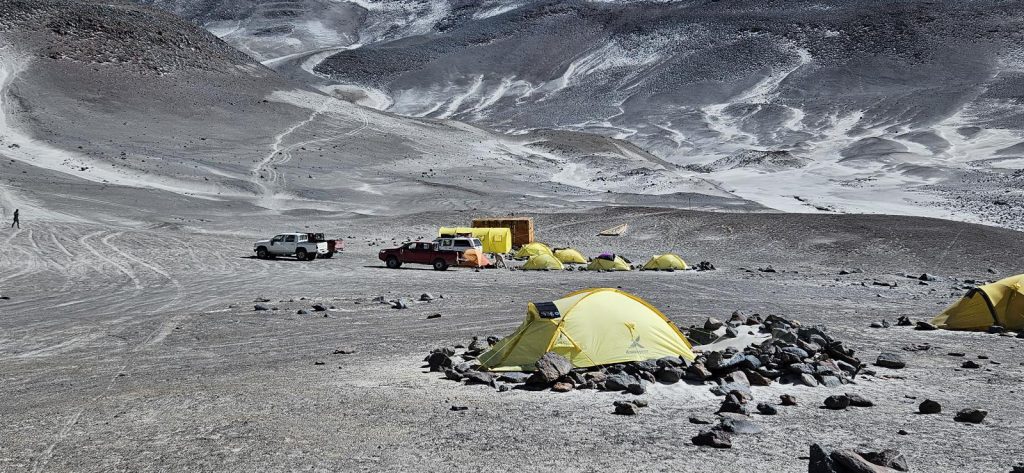
We take the vehicles and depending on the conditions drive to either the Refuge Atacama and walk up to the Refuge Tejos in about 3 hours, or we will drive up to Refugio Tejos and from there, we can take an acclimatisation hike along the Ojos del Salado path, reaching approximately 6,300 m. This road is famous for being one of the highest and most dangerous in the world. At Tejos there there is a metal hut; inside it is very basic and cold, but we are just resting and eating and getting ready for the very early start.
If the weather is cooperative a summit attempt of Ojos Del Salado 6893m. It will take 8-9 hours to reach the summit. Temperatures may be down to -20c with strong winds. Initially on a good rocky footpath to 6000m, then gain height with a series of zig zags on snow, then a long rightwards traverse to the crater of the volcano. The going is very slow and cold, and there are potentially penitentes fields to navigate.
Eventually we reach a very high lake, more often than not frozen, and circle the edge of the caldera to the far side and climb to the final ridge where there is a vertical 30 metre section of easy rock climbing with a fixed rope in place. From there it’s very quickly to the summit with dramatic views of the high Atacama desert and multitudes of peaks and volcanoes of Chile and Argentina.
Once down we take the vehicles back to Laguna Verde. This period includes an additional summit day to accommodate bad weather.
After an early breakfast, we’ll pack up camp and drive through the desert, dropping totally out of altitude to reach sea level and the pristine beaches of Bahía Inglesa, where we can bathe in relaxing waters and leave behind us the giant, that is the highest summit in Chile and the tallest volcano in the world.
Airport or bus station transfer