


World’s Highest Marathon, Ojos del Salado, Chile
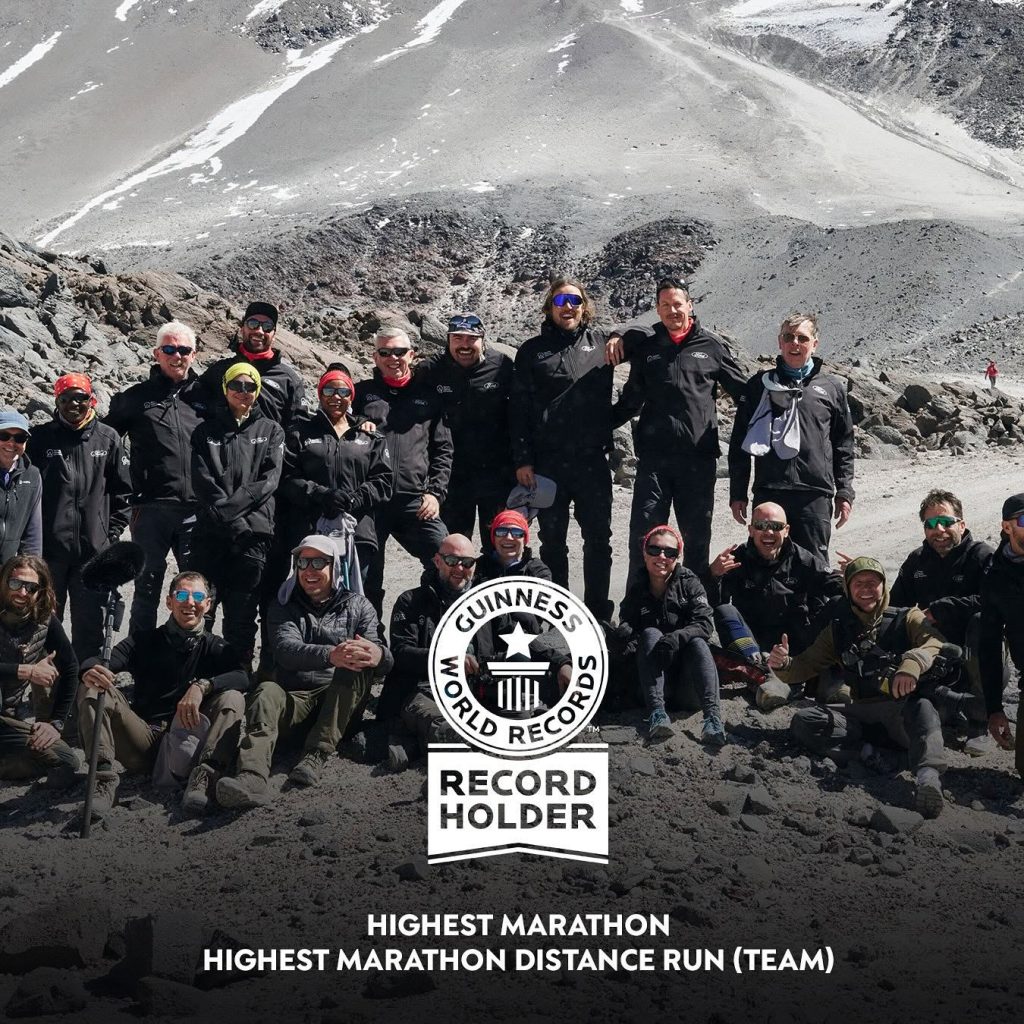
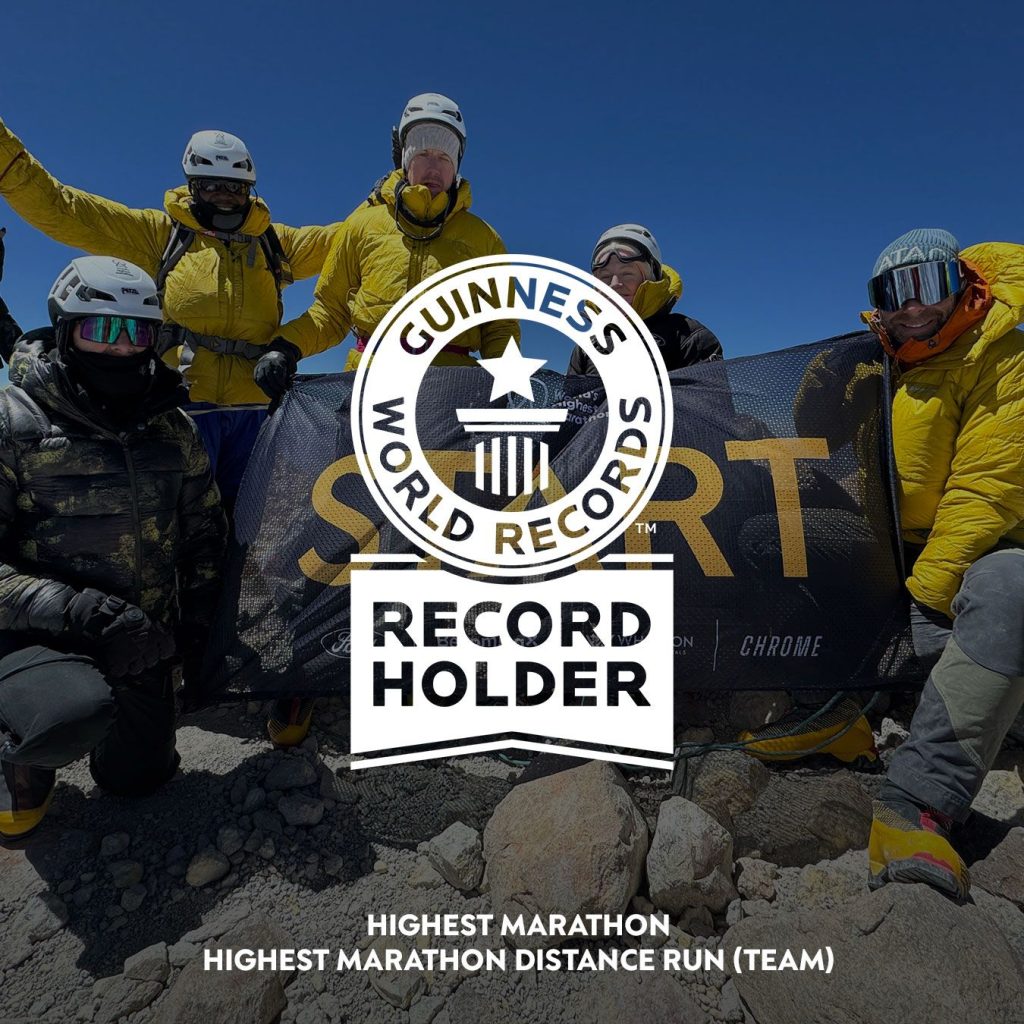
February 2026…after months of planning and organising with BecomingX and our partners High Mountain, we set off to the remote Atacama Desert in Chile to begin the ‘World’s Highest Marathon’ expedition from the top of a mountain called Ojos del Salado. The aim was to get a new Guinness world record, a gruelling expedition to run the distance of a marathon from the highest point ever attempted.
The marathon to some extent plays into a trend for ‘darecations’, or physically demanding adventures in some of the world’s toughest places, as this BBC Travel article describes. I have certainly seen this trend evolve over many years as an adventure travel operator. Indeed, there is another one next year in Bolivia which will attempt the highest consistent altitude for a marathon on the famous ‘Road of Jewels’ which will maintain an elevation of above 4395m.
Ojos del Salado is 6893m (22,615 feet) and the highest volcano above sea level; some people will know that Mauna Kea in Hawaii is the highest from base to summit, but a third of it is underwater. Other iconic volcanoes include Mount Fuji in Japan, Mount Etna on Sicily which is active, and Mount Kilimanjaro, which at 5895m was the location for the previous world record for the highest marathon in the world.
Ojos del Salado means ‘Eyes of the Salty One’, referring to the round turquoise lagoons and the salt pans that surround the mountain. It lies on the Argentine-Chile border and like most volcanoes it sits alone, but it’s not an outlier. It is one of twenty volcanoes over 20,000 feet that form the Andean Volcanic Belt that stretches the western edge of South America. The most well known is probably Chimborazo in Ecuador.
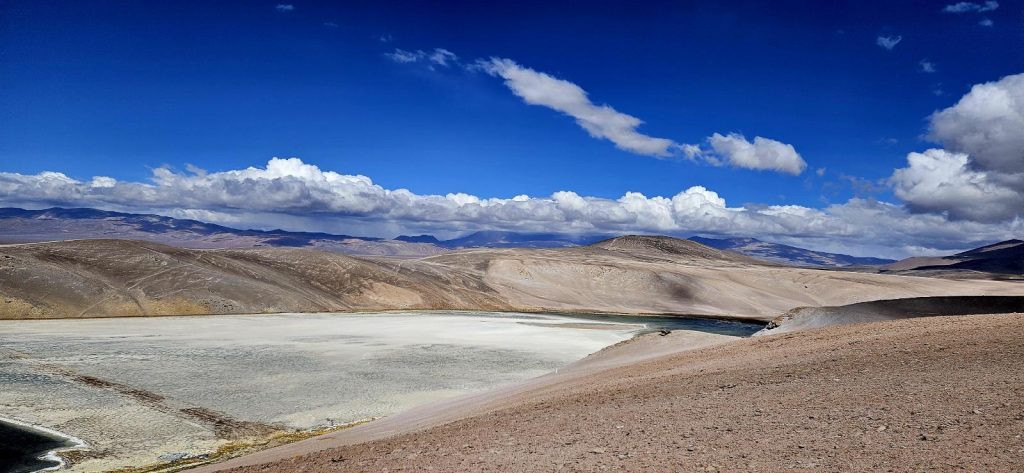
Ojos is an impressive beast of a mountain for its size, but I think the surroundings are what make it very special and unique. The Atacama Desert is one of the driest parts of the world, and the flora and fauna lives a tenuous and fragile existence, at one with the harsh environment. Mineral deposits, notably copper, have unfortunately brought mining activity that is inevitably putting unsustainable pressure on this landscape, so I think it’s a privilege to visit and still see such stark beauty. I love the simplicity of mountain life, but this expedition really sets that lifestyle into sharp relief.
I had been asked by BecomingX to organise and lead the World’s Highest Marathon expedition, having recently run the World’s Deepest Marathon down a Swedish mine, so this expedition was an obvious inverse but a very different challenge. Aside from walking up a big mountain and then running 42.2 kilometres from the top, the logistical task of transporting, accommodating and feeding a large group of people in a place like the Atacama was no mean feat.
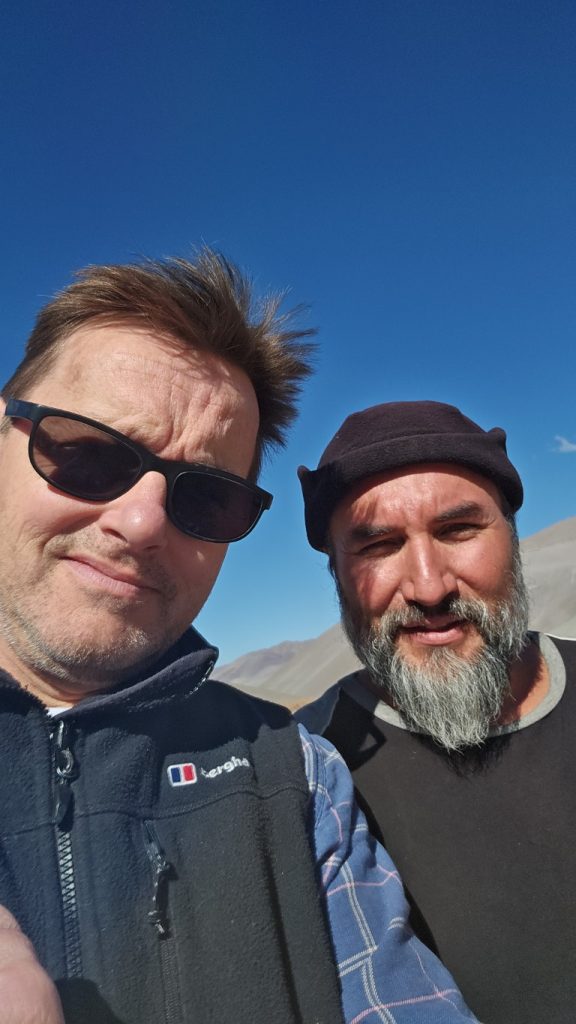
I turned to my friend Guillermo at High Mountain who I work with on all my mountain trips in that part of the world. I like Guillermo a lot, he has the same mentality as me when it comes to expeditions. He understands the hard work that goes into the prep and he’s focused on safety and professionalism and he’s been around long enough to have seen it all. His guides who I work with are fantastic; super fit and experienced, full of fun and self-deprecation, and they just love being in the mountains.
Paul Gurney at BecomingX is someone I’ve known for many years now, and he’s always impressed me with his positivity and high ambition! Never one to be shy of making an approach, he managed to secure sponsorship from Ford in the form of some very fancy off-road vehicles and also the budget to make a documentary.
This then led to a film crew of seven coming along on the trip, through the highly respected Chrome Productions. These are people at the top of their game, having been involved with many famous adventures programmes on television; our expedition was frankly small fry to people of this calibre, but nonetheless they were so focussed on squeezing the best imagery, audio and content out of every shot. When you watch a series like ‘Expedition’ on television, it’s easy to forget just how good the film crew are. It was such a pleasure to work with them.
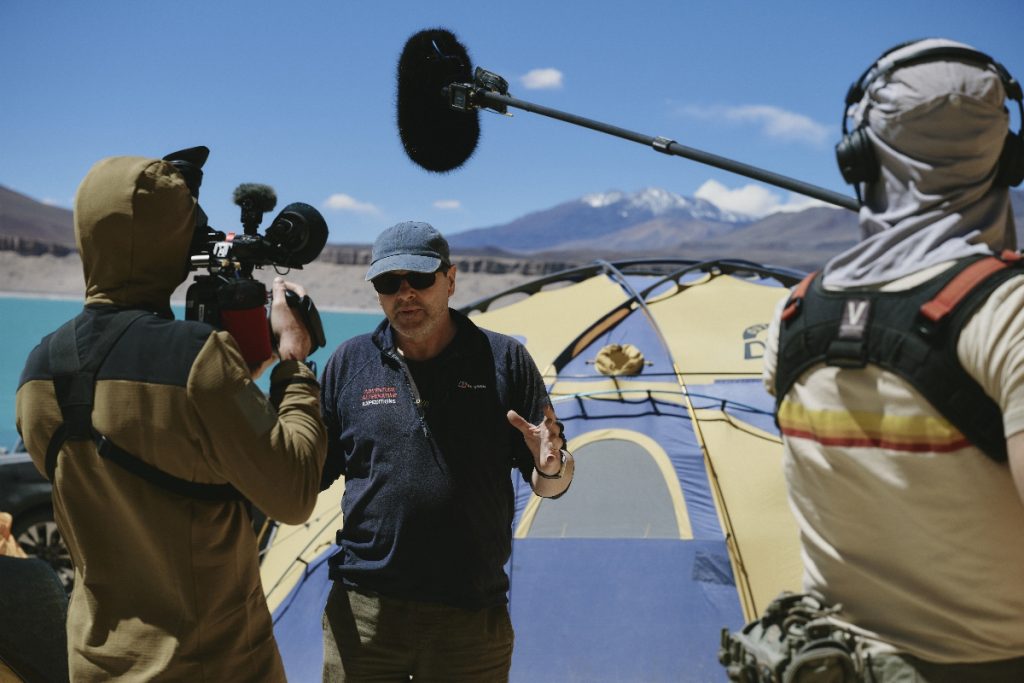
The team for the World’s Highest Marathon included runners and a support group who helped with driving the vehicles. The group were all like-minded in their pursuit and enjoyment of adventure and challenge, but apart from one person nobody had ever been to this part of the world before and I was asked about some of the specific challenges in this article at the American Trail Running Association. On a trip like this there are the logistical requirements and then the human dynamic, a group of people living together in a remote location for several weeks and hopefully all getting on!
Some people I knew from previous expeditions, like Nigel Vardy who is such a likeable fellow and an asset to any team, but most of the group were new to me. Sibusiso Vilane from South Africa is a wonderful character, and my good friend Tom McLoughlin from North9 who runs my digital marketing here at Adventure Alternative, was somebody I was very happy to see in the group.
There were some experienced and knowledgeable mountaineers and some amazing runners, and in the finality everyone got on with each other very well. It’s very easy to write those words, but it’s not an easy thing to achieve! I personally dislike competitive expeditions, and certainly on these bigger peaks it’s a key consideration to work well together. Having lived much of my life in East Africa, I’m motivated by the Ubuntu philosophy which says “I am because we are”. I set about to try and set an example for that egalitarian approach from the start.
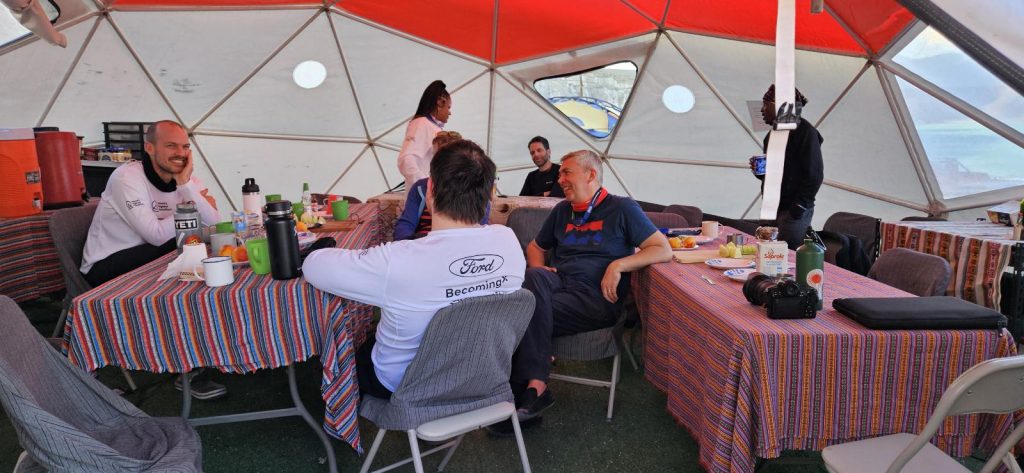
While the aim of the expedition was to achieve a world record, my slightly more prosaic aim was to get the whole team to the start point in a physically healthy state, and mentally motivated to give it a go. I concentrated on the basics of making sure everyone was eating, sleeping and drinking well, and also acclimatising well. Every individual acclimatises at different rates as our bodies adapt to the hypoxia of being at altitude. I needed everyone to reach the same optimal point on the same day with no early dropouts due to sickness. Again, easier said than done. Many people assume that if you’ve done a lot of high stuff before, you’re ‘programmed’ to respond well to a lower concentration of oxygen in the air. But there are many factors at play and even after working in the high mountains for thirty years now, I am never complacent about my own ability to adapt.
So we did a lot of resting, a lot of eating and drinking and sleeping, and we went on easy hikes… and we waited for our bodies to adapt. Years ago there was a belief that you needed to push your body higher and higher each day, to kind of prove that you were acclimatising. I remember during my first Everest expedition in 2000, it was a requirement to ‘touch’ Camp 4 at 8000m before you were considered ready to try for the summit. By 2011 and my sixth Everest expedition, nobody was doing that except for the Sherpas, who didn’t need to prove anything to anyone anyway.
I have climbed Ojos del Salado five times before, and I remember on my first trip we would sleep at the 5500m Tejos refuge before summitting. The summit success average in those days was about 50%. Now, nobody sleeps at Refuge Tejos; everyone sleeps low at the laguna and the summit success rate averages 80% annually. So on this trip we spent a lot of time at the laguna, where thankfully there are hot pools to bathe in, toilets, wifi and lots of other people around to meet. The heat is pretty extraordinary, but essentially it’s a comfortable base camp.
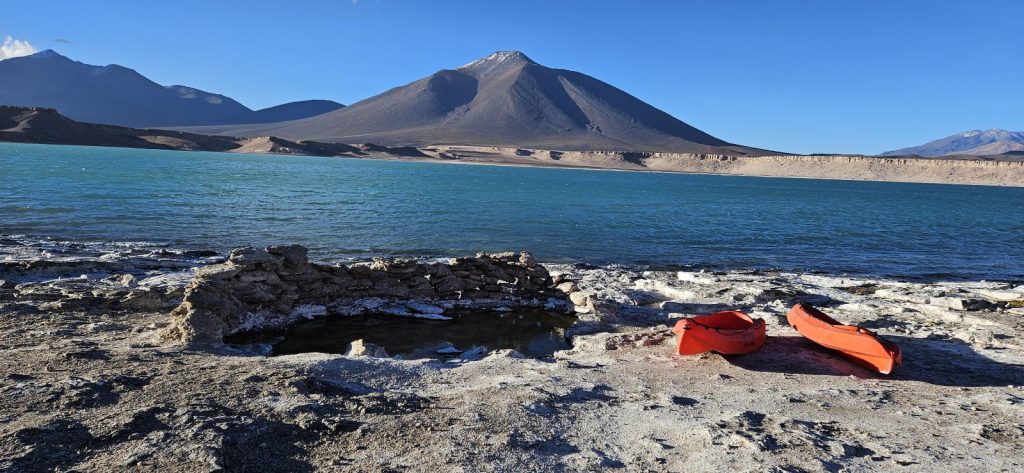
Ojos del Salado is not a particularly difficult mountain to climb; like many volcanoes it has a symmetrical cone shape with low gradient slopes. The summit of Ojos has a rocky broken rim that involves some scrambling and climbing for about 90 feet, UIAA grade II/III (YDS5.6), which at sea level would be a bit of fun. At nearly 7000 metres it’s quite a bit of puffing! But essentially it’s a high altitude walk.
I have taken five groups up Ojos before, including my wife (then fiancee), and each time the conditions were quite different. Always cold and windy though, which is typical of the ‘Venturi effect’, as prevailing westerly winds track across the Andes and are funnelled across the high passes in this high desert environment. These relentless Andean wind patterns, high altitude and lack of atmospheric insulation or cloud cover, means it will always be cold and windy and hard work.
Added to that the dryness of the Atacama Desert itself; the low humidity and lack of moisture means almost no snowfall, and very little cloud cover. During the day, the high peak is exposed to freezing air and the solar radiation causes sharp temperature spikes around the base. Diurnal temperature range can be fifty degrees which is very debilitating on the human body. Add to that the windchill which is typically -35°C on a typical summit day where the ambient temperature is -10° C to -15° C. I knew very well that all of this, plus climbing through the night, would be the biggest challenge. Everybody had good clothing, but there is much benefit in being economical and efficient with your movement, and adopting a certain mindset when it comes to these kinds of challenging moments. But the simple reality is that at high altitude your body cannot produce enough heat, the muscles struggle with less oxygen, the breathing is not as effective, and everything is hard. Having got everyone to the start point of the climb, I really had no idea how everyone would react during those key hours going to the top. As a mountain guide you never quite know!
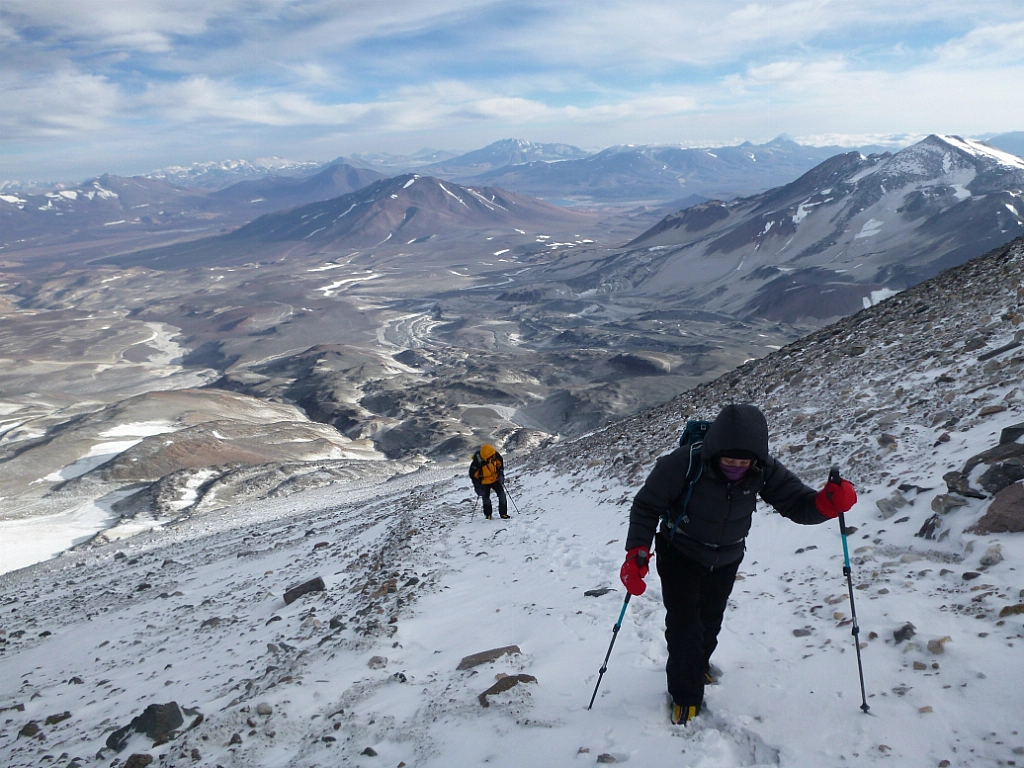
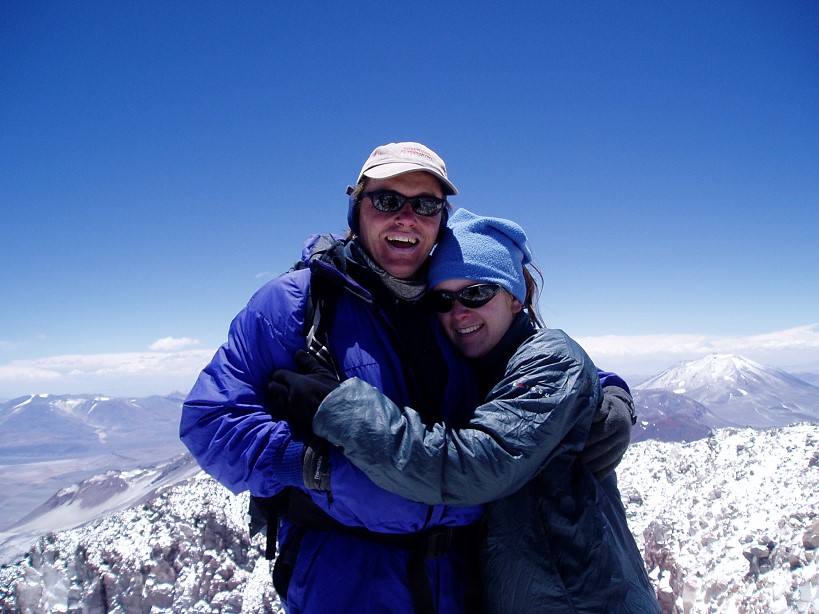
The night of our planned summit was pretty normal as far as Ojos summits go, Guillermo and the other guides were confident. We drove up in our Ford vehicles to the refuge Tejos and started the hike at around 11pm. The path is not difficult to follow, but inevitably with such a big group we were moving slowly. Several people at the back started to get cold, so at one of the stops they moved to the front with two of the Chilean guides.
We carried on and the wind picked up as we came round on to the shoulder, a steady 40kph into our faces, and obviously quite cold. That, with the strenuous activity as we came to 6200m, meant that some in the group started to feel dizzy and groggy and slowed down even more. I started walking up and down the line, checking people, and meanwhile I saw the lights of the front group pulling ahead, they looked strong. That was five of the marathon team and two of the film crew plus three guides.
Over the next hour or so, nine people turned back and three of the Chilean guides plus myself went with them to help. We had oxygen in the cars and the hut at Tejos to rest in. I had a Chilean paramedic there too, so he and Guillermo shuttled people back to the refuge and I went back up the path to meet any others potentially on the way down. Thankfully I was feeling quite normal and warm, but after two more hours going up again I didn’t meet anyone so there was no point in carrying on. The front group would be coming into the crater and it was very unlikely I’d catch up with them now.
This was true, the five in the front group had popped over the lip into the crater with dawn on them now, and the two film crew had stayed put behind some rocks. The climbers were now filming on their phones and the film shows the wind picked up and there was windblown ice. However as you walk round the rim you’re out of the worst of the wind and they were able to start the rock scramble without all that noise. The 90 foot climb looks quite daunting at nearly 7000 metres but there are good holds and some protection, plus the guides will climb first and top rope anybody behind.
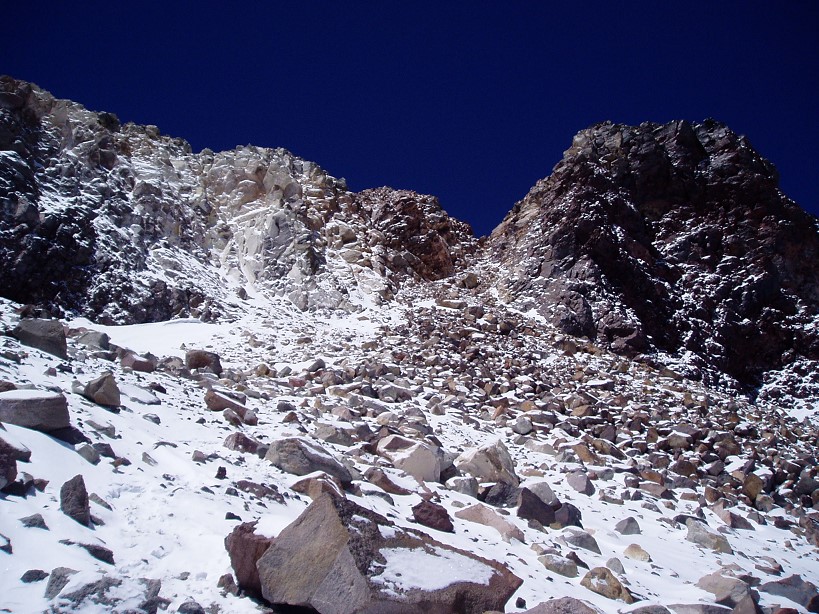
Back at the refuge I decided to send people down to the base camp at Laguna Verde. Safety in the Tejos hut was one thing, but it was still high at 5500m. They went down and I stayed at the hut with the remaining film crew. And we waited.
We saw the summit team coming off the shoulder and into view, tiny figures zigzagging down the huge slope. Eventually they appeared at the hut, dusty and tired and hot, and we took a break. They changed out of mountain clothes into running clothes. They had just climbed the peak to 7000m and come back down to 5500 metres, but it was only a lateral distance of about 5 kms. Now they had to start running.. the World’s Highest Marathon was still a long way to completion!
I was now the support team in the Ford Raptor following the five runners and I knew what was ahead! This was one option in my list of options depending on how things would pan out, so I was mentally prepared for a long slow drive across trackless desert through the night. The team donned running shoes and started down the rest of the mountain and into the Atacama Desert. I have to say they showed tremendous resolve at that moment, a plucky group jogging into the sunset at an average speed of about 4 kmh, with me following.. in first gear.
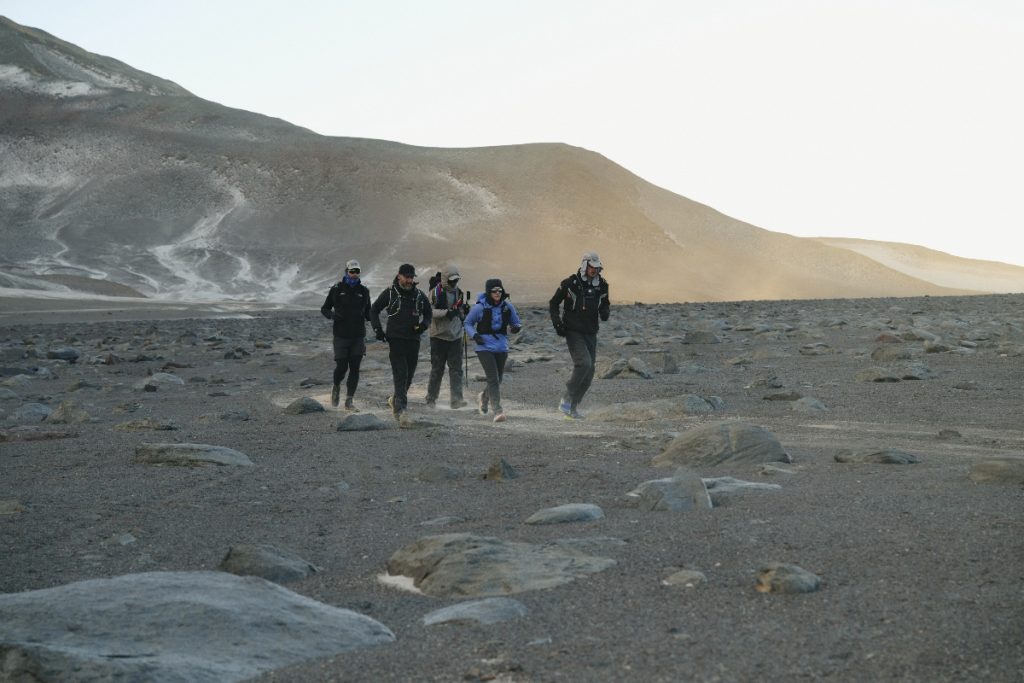
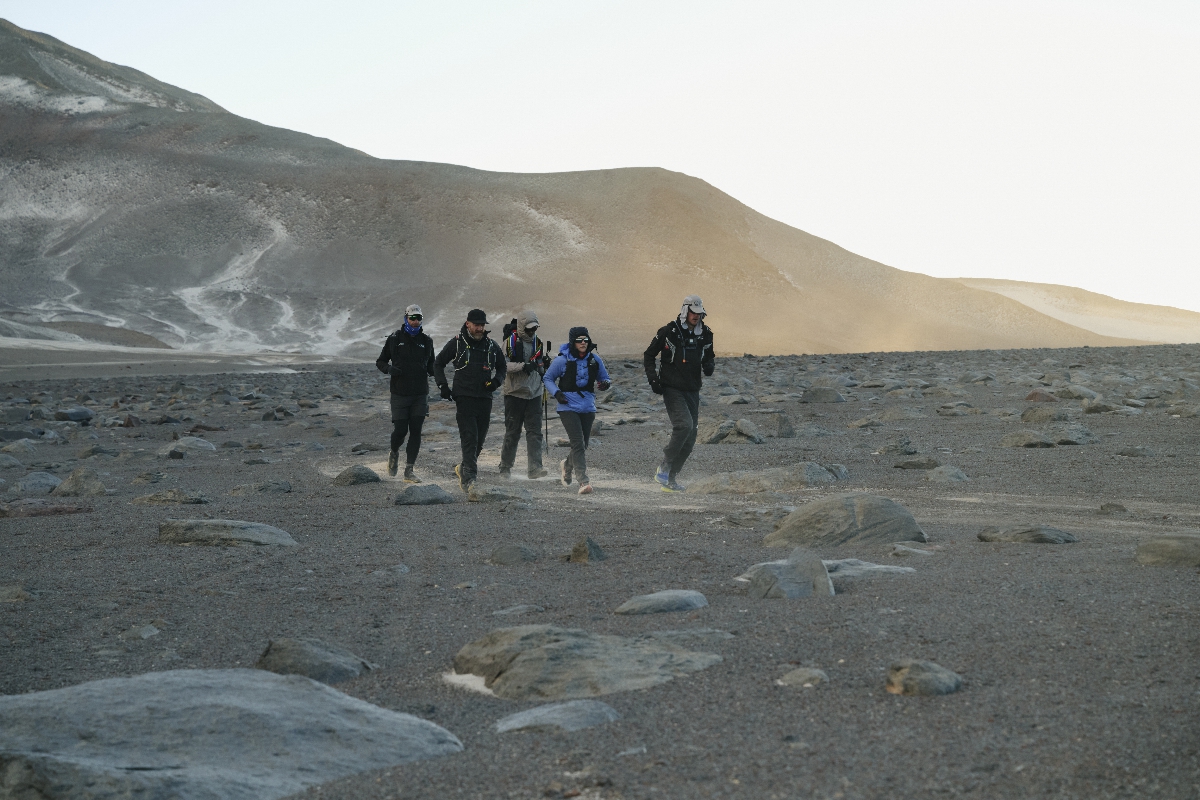
Eventually it was just us and the night desert. The film crew left as the sun went down. As the sky turned pitch black, they ran in front of the beams of my headlights. If you look at the picture above you’ll see the terrain was continually rocky the whole way, so I slowly navigated the car round this relentless boulder field for the next eleven hours. I had water and snacks, so we stopped every once in a while to eat and hydrate. We were all now on our second night without sleep, and there was some degree of hallucination which is common when you’re sleep deprived. I found it increasingly difficult to concentrate on the driving and avoiding the boulders and the soft sand, while the runners weaved and bobbed in front of me.
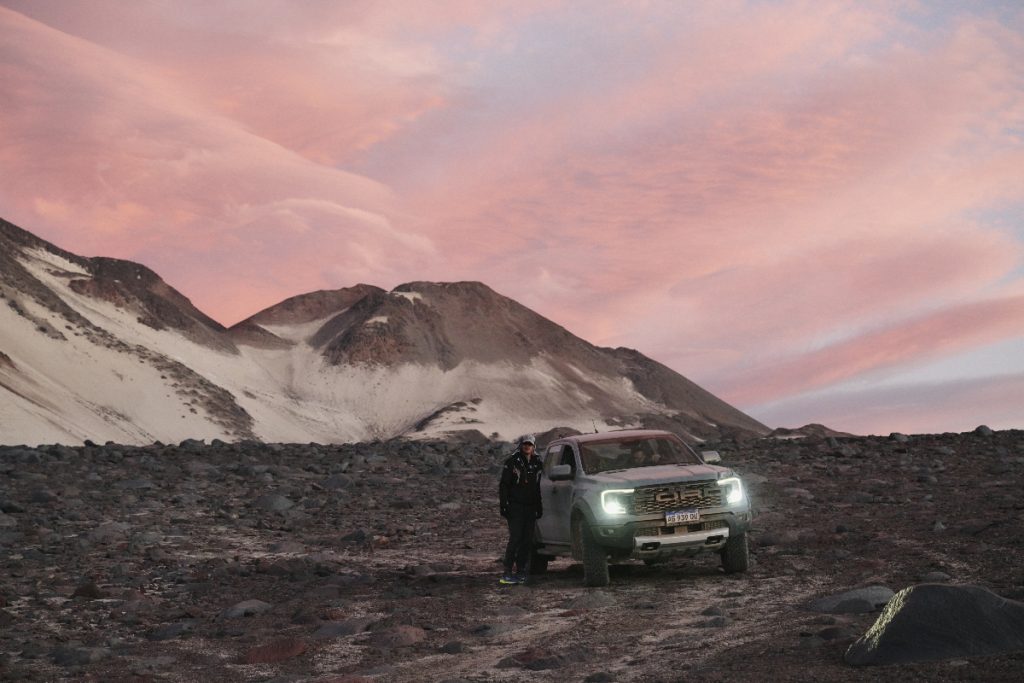
The whole thing was quite a surreal experience. The five runners were in the zone, just plodding on, counting the kilometres, and the night passed so slowly! The World’s Highest Marathon became the World’s Longest Marathon. In those hours we experienced a connection which happens when people share something so different and frankly unusual in Life. It’s something you can’t really describe to others, because it became so otherworldly. The remoteness of the desert, the silhouette of peaks across the night sky, the beams of light and the endless rocks, the silence and the extreme tiredness; it all conspired into something quite spellbinding. I felt proud of our endeavour, even as I pondered on the meaning of it all. This is a question I often ask myself when doing those big climbs and long expeditions; after thirty years, the motivations have changed.
A long time ago I walked across the Sahara Desert by myself, from north to south of Algeria in six months. I was following in the footsteps of the French priest Charles de Foucauld whose story of endeavour had fascinated and inspired me to follow in his footsteps. There is something about the mental world you go into when you’re in a vast uninhabited environment which is so elemental that it forces you onto your fundamental abilities as a human to provide those key needs of water, food and shelter. It also plays into that need for Place which anchors us. Out there I had in the Sahara on my own I had no place, I was as irrelevant as piece of sand, existing in the moment. And during that long night in the Atacama, I was reminded again of how much I’m drawn to that nomadic lifestyle, but how now I have a wife and family and a place we call Home. That need to walk the Razor’s Edge, as Somerset Maugham put it, doesn’t seem so important now.
Well, it took all night and towards the end we hit the highway for the last few kilometres. I drove ahead to wake the rest of the team at camp and we all congregated at the finish line, 42.2 kilometres from summit of Ojos, now a distant peak. It was a chilly desert night as we stood waiting, and suddenly five headtorch lights came into view. Were they stars? We weren’t sure initially, but they grew in size and became figures, still jogging along. The end was in sight. After two nights and a day, a new Guinness record for the World’s Highest Marathon was set.
As usual when there’s a job like this to do, I list my memories in terms of priorities. No fatalities, no accidents, no incidents – tick. Not everybody did it, but with a trip like this it would have been overly ambitious to assume 100% would. But everybody was part of it, and I hope that’s what will count. I was so happy and proud of my Chilean team, they were always there and without them it would have been a whole different experience.
The film has now become publicly available on the Ford Youtube channel and hopefully you will enjoy it. I am reminded of the tremendous ability of a film crew to record and edit such a big experience into such a great film. I’m very grateful to BecomingX for the opportunity, and I am indebted to my friends in Chile who helped make this the success it was.
World’s Highest Marathon Team:
Record breakers:
Paul Gurney (BecomingX)
Mark Beaumont
Aldo Kane
Sibusiso Vilane
Sara Storey
Participants:
Andrea Cornejo
Renee Heath
Nigel Vardy
Tracey Finlayson
Andrew Finlayson
Thomas Webb
Tom McLoughlin
Thomas Dunn
David Thomlinson
Andrew Goss (photographer)
Gavin Bate (Trip lead & organiser)
Film Crew:
Paul Fletcher
Mark Wilson
Daniel Etheridge
Pete Lee
Thomas Reader
Daniel Bowring
Ariel Marinkovic



Related Articles
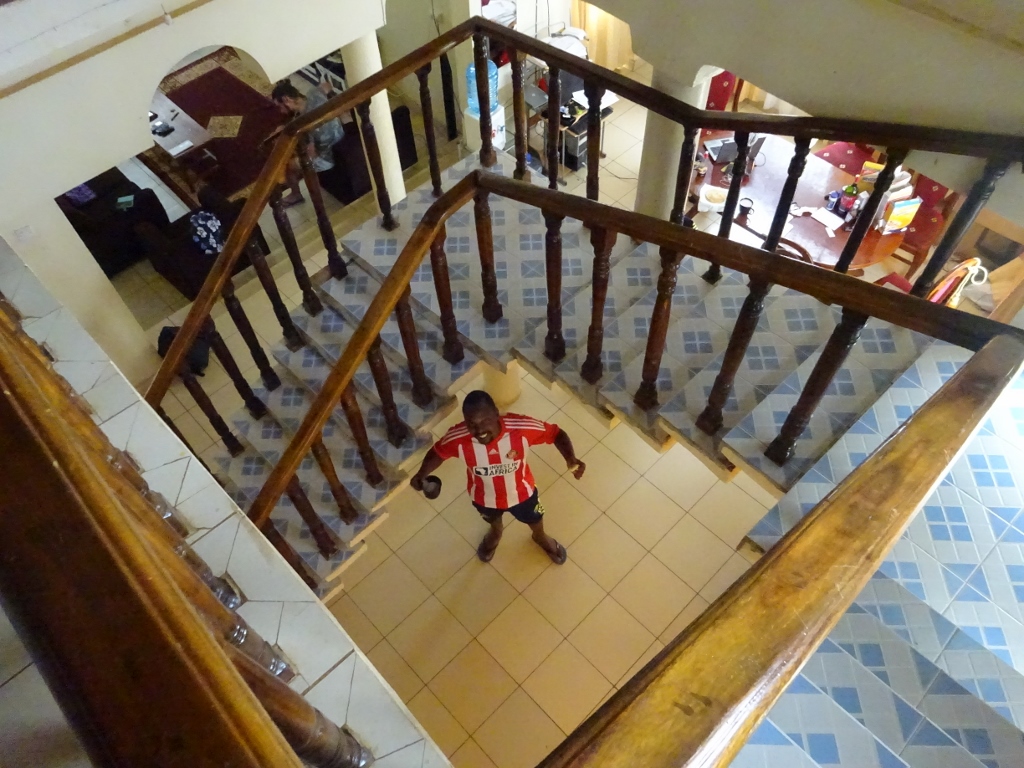
Accommodation in Embu Guest House
Anyone visiting Embu on a Medical Elective or to volunteer with the Moving Mountains Trust will spend time in our Adventure Alternative guest...
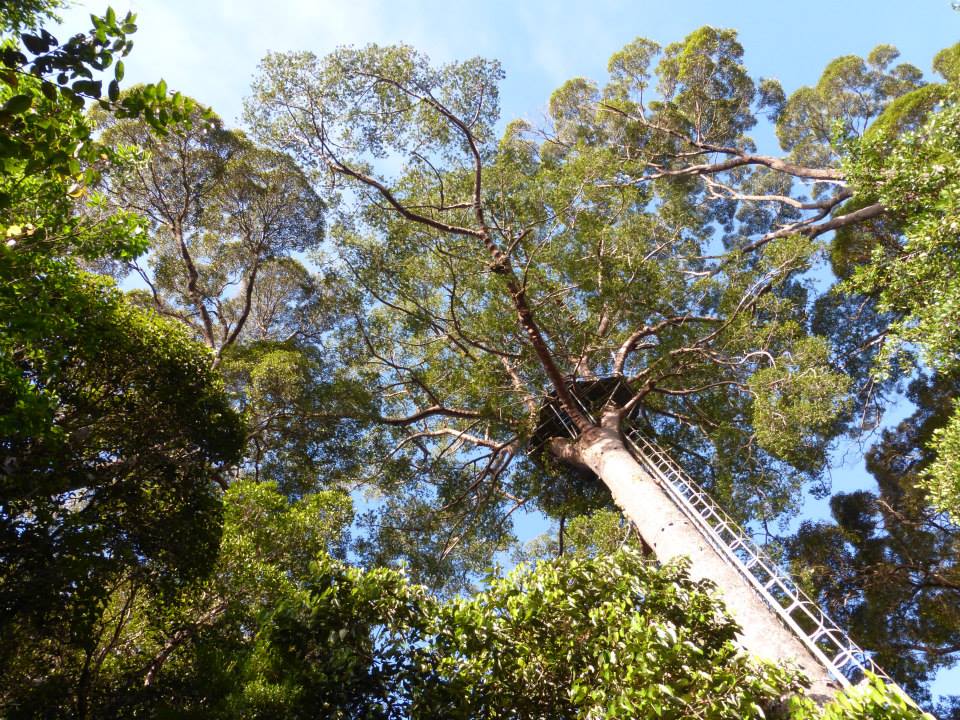
How challenging is a Maliau Basin Trek?
The Maliau Basin has only partially been explored, leaving over 50% of the area completely untouched. It is conservation reserve of dense, untamed...
Hammock Life – Volunteering in Borneo
Nothing quite beats waking up to the sound of the rainforest while gently swinging in a weightless cocoon; the dappled sunlight...
Jungle Survival Tips
The last 12 months have been a big period for adventure movies in Hollywood, with The Revenant, The Jungle Book and now ‘Jungle’ starring...
Top 10 Facts about Borneo’s Maliau Basin
A UNESCO World Heritage sight, the Maliau Basin is an enormous forested hollow in the state of Sabah, Borneo. It is home to a huge variety of flora...
18 of the Best Treks in the World
Multi-day treks can be gruelling on the body and some of the big summits will push your mental threshold further than ever before. But with the...