Chulu East Peak is situated in Nepal’s Annapurna region and offers a rewarding and adventurous climb for those eager to experience the Himalayas. At 6,584 meters (21,600 feet) it is a high mountain and although not an overly technical mountain, climbers should be prepared for some challenging conditions, including snow and ice ascent. Our approach trek to the mountain takes and unusual and adventurous journey through the stunning, magical and seldom visited Naar Phu Valleys!
Chulu East Peak, situated in Nepal’s Annapurna region, offers a rewarding and adventurous climb for mountaineers eager to experience the Himalayas. At 6,584 meters (21,600 feet), the peak is considered relatively approachable compared with many other Himalayan summits, making it an appealing objective for climbers who want a challenging yet achievable high-altitude expedition.
The journey generally starts in Besisahar, a town in the Lamjung district. From there, climbers follow a trekking route toward the mountain’s base camp. We take an alternative route that includes an adventure into the Naar Phu Valleys, which only opened in 2003 and remains a seldom trekked area that requires a special permit to enter. The Naar Phu Valley is a hidden network of high-altitude valleys tucked behind the main Annapurna region. A bridge over the Marshyangdi River brings the trail towards the steep portals of the Nar Phu Valley, which is easy to miss. Once through the narrow, forested ‘entrance,’ a whole other world awaits.
Comprising the secluded villages of Naar and Phu, these valleys sit in a stark, trans-Himalayan landscape where lush greenery gives way to arid cliffs, wide glacial plains with dramatic rock formations shaped by wind and time. Trekking here feels like stepping into another world: expect narrow trails through deep gorges, vast open plateaus framed by snow-capped peaks, and encounters with yak caravans and centuries-old monasteries. The isolation means far fewer trekkers, creating a peaceful, almost timeless atmosphere. Culturally, the region is deeply influenced by Tibetan Buddhism, and visitors gain a rare insight into traditional lifestyles that have remained largely unchanged for generations. Throughout the trek, travellers are surrounded by impressive views of towering mountains including Annapurna II, Annapurna IV, and Gangapurna.
After days of stunning trekking, we reach base camp at roughly 4,800 meters. Here, we spend time acclimatising to the altitude and practicing our mountaineering skills, before beginning the ascent. The climb requires a combination of mountaineering skills, as it includes snow and ice sections along with occasional rock scrambling. We establish a further high camp at 5600m before making our final attempt on the summit. Along the way, we will navigate crevasses, steep slopes, and possibly unpredictable weather, all of which add to the challenge.
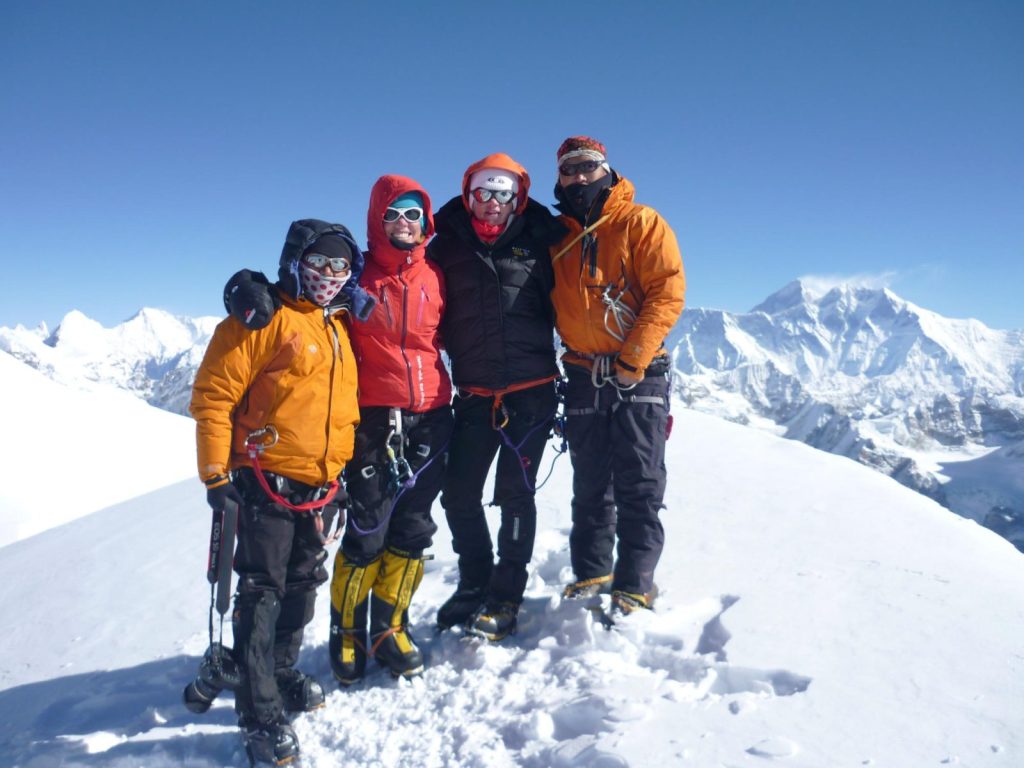
Despite the demanding conditions, the summit rewards climbers with extraordinary views. From the top of Chulu East there are sweeping panoramas of the Annapurna and Dhaulagiri mountain ranges, as well as a breath taking perspective of the Marsyangdi Valley far below. Standing on the summit brings a deep sense of accomplishment, making Chulu East a memorable objective for anyone seeking a true Himalayan climbing adventure.
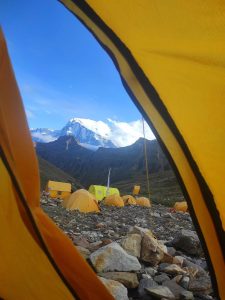
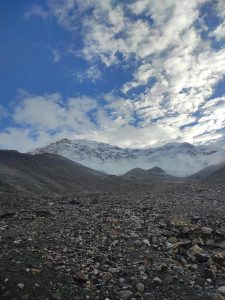
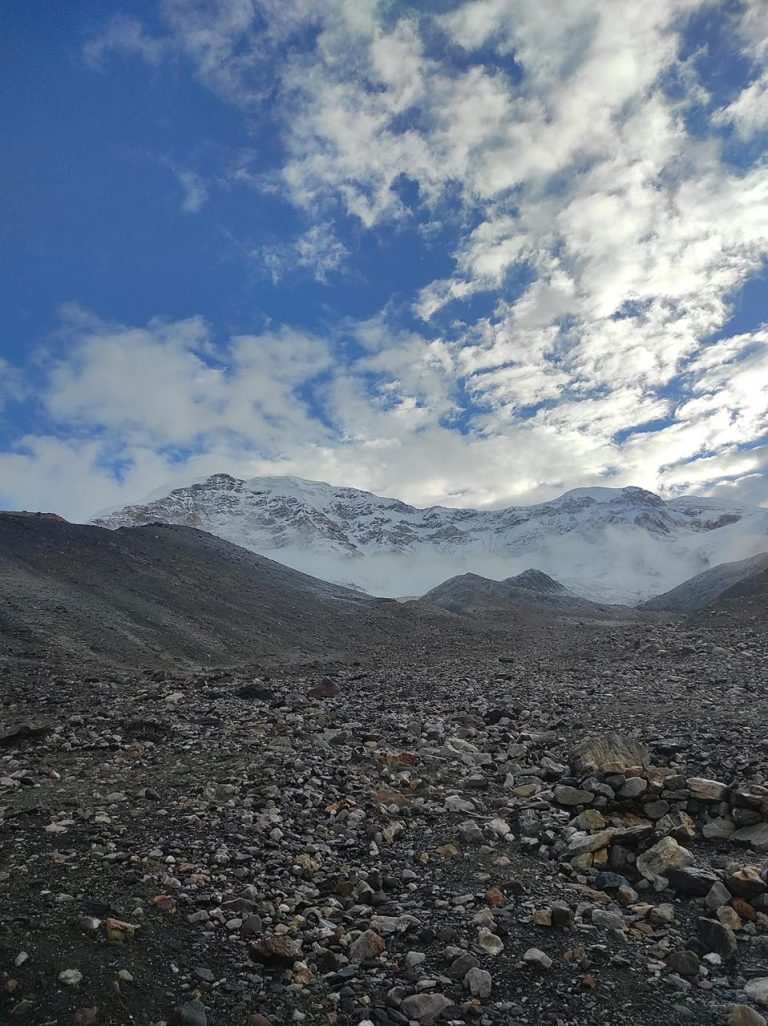
A view from your tent at Chulu East Base Camp
Chulu East Peak Itinerary
Note: mountain itineraries cannot be guaranteed, the guide has the option to change the programme according to the many factors that determine safety and potential success. This may be weather, the health of the group, or any changes in circumstances. Please take the above with a degree of openness and flexibility which reflects the fact that this is a high altitude peak.
Day
Summary
1
Arrive Kathmandu, transfer to hotel
Elevation:
1400m
2
Rest day in Kathmandu
Elevation:
1400m
A day to explore this vibrant, fascinating city. We can organise a guide and transport for you to make the most of your time. Kathmandu City Tours
3
Drive to Dharapani
Elevation:
1860m
Travel Time:
10hrs
After breakfast, we depart Kathmandu and travel west toward Pokhara with our trekking team. Around three and a half hours later we reach the small town of Dumre, located beside the Marsyangdi River. Here we leave the main highway and head north along a narrower mountain road that winds through scenic hillsides, rivers, and traditional villages, with plenty of roadside cafés and eateries along the way. As we continue deeper into the mountains, there may be occasional views of the Himalayan peaks before we arrive at Dharapani, where we stay overnight in a lodge. Although the journey is long, it is a beautiful drive and positions us well for the start of the trek.
4
Trek to Koto
Elevation:
2600m
Travel Time:
5-6 hrs
Our trek begins with a steady climb that soon rewards us with our first glimpses of Lamjung Himal (6,983m) and several peaks of the Annapurna range. This region is known for the warmth and friendliness of its people, and along the route we pass many teahouses where locals greet trekkers with welcoming smiles. Passing through the villages of Thoche and Thanchowk, where Hindu traditions remain strong, we continue onward to the village of Koto for an overnight stay in a lodge
5
Trek to Meta
Elevation:
3560m
Travel Time:
6 hrs
We set off early for a longer but rewarding day on the trail. After crossing the river, we enter the remote Nar and Phu valleys, which lie away from the busy Annapurna Circuit and retain a more untouched and authentic feel. The trail passes through wooded areas, natural caves, and cascading waterfalls before gradually climbing to the village of Meta. Overnight in a lodge.
6
Trek to Kyang
Elevation:
3800m
Travel Time:
4 hrs
Today is a shorter and more relaxed trekking day. The trail follows the Nar River, offering impressive views of Kang Guru and the peaks of Annapurna II and IV. As we continue, the scenery becomes more rugged and open, resembling a high-altitude plateau dotted with ancient Tibetan-style settlements that are traditionally inhabited during winter months. Overnight in Kyang.
7
Trek to Phu Valley
Elevation:
4080m
Travel Time:
6 hrs
Today’s journey takes us deeper into the dramatic landscapes of the Nar Phu Valley. The trail follows a spectacular arid gorge, passing striking rock formations, ancient chortens, and the Phu Khola River. Gradually the path climbs toward the fortified medieval-style village of Phu, home to the historic Tashi Lhakhang Monastery. This remote settlement offers a fascinating glimpse into traditional Himalayan culture. Overnight in a lodge in Phu.
8
Visit Himlung basecamp and Return to Phu Valley
Elevation:
4800m
Travel Time:
5 hrs
Today we take an excursion from Phu Village to Himlung Base Camp. Although the ascent takes around three hours and can be physically demanding, the reward is outstanding panoramic scenery. From a grassy terrace near the Pangir Glacier, we enjoy sweeping views of the Annapurna and Manaslu ranges, along with neighbouring peaks such as Nandadevi and Rajramba. This also serves as an excellent acclimatisation day before returning to Phu for the night.
9
Trek to Nar Phedi
Elevation:
3490m
Travel Time:
5 hrs
Leaving the stone houses of Phu behind, we descend along the scenic Phu Khola valley. The trail passes through dry riverbeds, mani walls, and alpine meadows before branching toward Nar Phedi. Rather than a traditional village, Nar Phedi is home to a peaceful Buddhist nunnery where trekkers are welcomed with simple vegetarian meals, modest accommodation, and a glimpse into the spiritual life of the resident nuns. Overnight at the nunnery.
10
Trek to Nar Gaon
Elevation:
4200m
Travel Time:
6-7 hrs
Today we retrace part of our route before turning near the Nar Monastery, the only structure in the immediate area. The trail passes beautiful chortens and clusters of bamboo as we make our way to Nar village. Despite its proximity to the Annapurna trekking routes, Nar Gaon receives relatively few visitors, helping preserve its quiet and authentic character. Overnight at a lodge.
11
Trek to Ngawal via Kangla Pass
Elevation:
3660m
Travel Time:
6-7 hrs
We start the day with a steady climb toward Jhombu Kharka, also known as Kang-La Pass. From the pass we are rewarded with magnificent views across the Annapurna and Dhaulagiri ranges and the surrounding Himalayan peaks. Along the route we may encounter temporary yak herders’ camps. After taking time to enjoy the views, we descend to the village of Ngawal for the night.
12
Trek to Yak Kharkha
Elevation:
4200m
Travel Time:
4-5 hrs
Today’s scenic trek leads from Ngawal toward Yak Kharka, often passing through the village of Manang along the way. The route winds through juniper forests and alpine grazing pastures with a few gradual climbs. Throughout the day we enjoy close views of Annapurna III before reaching Yak Kharka for an overnight stay in a lodge.
13
Trek to Chulu East Basecamp
Elevation:
4200m
Travel Time:
4-5 hrs
Following grassy slopes and moraine paths, we gradually approach Chulu East Base Camp. The final stretch involves a steeper section before reaching our campsite. Tonight we stay at a tented camp at the base of Chulu East.
14
Training & Acclimatisation Day
Elevation:
4600m upwards
Today is dedicated to acclimatisation and preparing for the climb ahead. Our guides will check equipment, provide safety briefings, and demonstrate and you fine tune your climbing techniques. We will also take short acclimatisation walk around base camp while enjoying views of the surrounding Annapurna peaks. Overnight at our tented camp.
15
Trek to High Camp
Elevation:
5600m
Travel Time:
5hrs
After organising our climbing gear, we ascend to High Camp. The terrain becomes steeper and more rugged, requiring careful footing. Once there, we establish camp in a strategic location that allows easy access to the summit route. Weather permitting, the sunset here can be spectacular as the sun dips behind the Himalayan skyline. Overnight at High Camp.
16
Summit and return to Basecamp
Elevation:
6584m - 4200m
Travel Time:
8-10hrs
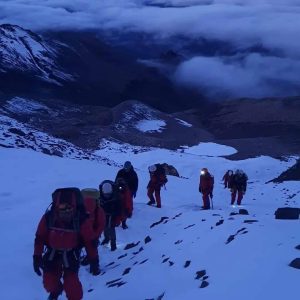
We begin the summit attempt very early in the morning, often beneath a star-filled sky. It is a challenging 8-10 hour day, which starts with a climb along snowy slopes above our high camp, which leads to a high ridge. We traverse the snow-covered ridge, using crampons and ice axes, often on steep, lofty slopes. From the summit we are rewarded with breath taking panoramic views of the Himalayas, including the Annapurna massif, Dhaulagiri (8,167m), Hiunchuli (6,441m), and the Manang Valley far below. After celebrating the achievement and taking photographs, we descend carefully back to Base Camp for the night.
17
Contingency / Weather Day
Elevation:
3680m
This extra day is reserved as a backup in case poor weather or other conditions prevent a summit attempt on the planned day. If the climb has already been successful, we will begin descending toward Manang and stay overnight in a village along the route.
18
Trek to Manang
Elevation:
3540m
Travel Time:
6-7 hrs
From base camp we continue our descent toward Manang. As we lose altitude, the landscape gradually changes, with barren high-altitude terrain giving way to traditional villages and monasteries that reflect the region’s strong Buddhist heritage. Along the way we enjoy views of Tilicho (7,134m), the Annapurna range, and Gangapurna (7,454m). Overnight at a lodge in Manang.
19
Drive to Besisahar
Elevation:
800m
Travel Time:
5 hrs
Today we drive from Manang to Besisahar. Although the distance is only around 90 kilometres, the journey takes roughly five hours due to the winding mountain roads. The drive offers dramatic scenery and a memorable descent from the high Himalayas into the lower valleys.
20
Drive to Kathmandu or Pokhara
Elevation:
1400m
Travel Time:
6-7 hrs
We continue our journey back to Kathmandu, which takes around six to seven hours. The route passes through rural landscapes and river valleys, gradually descending from the mountains to the lowlands. Upon arrival, you will check into your hotel and have the remainder of the day free to relax or explore the city. Alternatively we can drop you to Pokhara where you can relax for a few days and then travel by road or air back to Kathmandu.
21
Depart for home or relax in Pokhara
After an unforgettable Himalayan adventure, you will be transferred to the airport for your onward journey home.
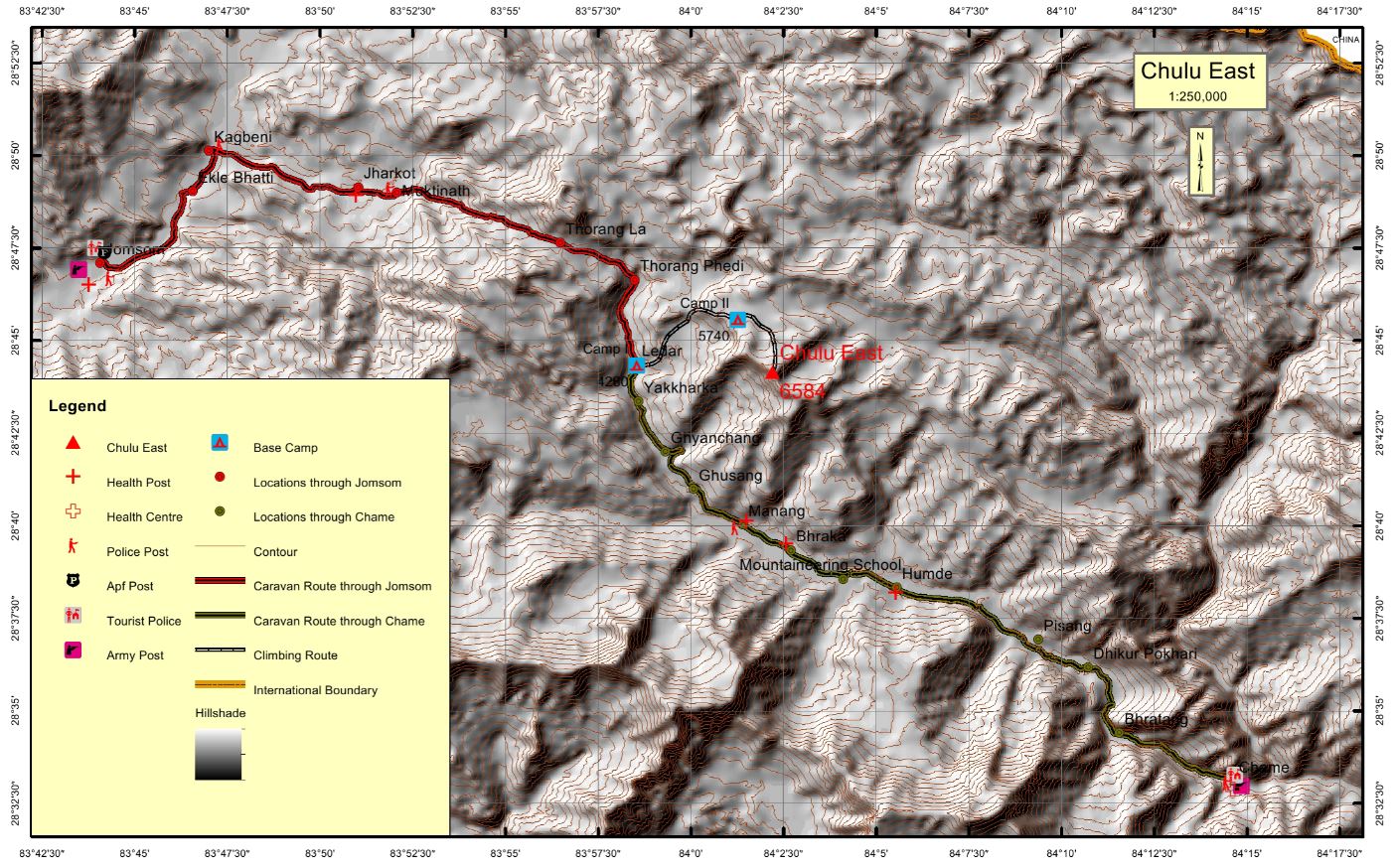
Click on the map for a larger version
Ready for an Adventure of a Lifetime?
Choose a scheduled date or contact us to set up private dates or a bespoke itinerary. The minimum deposit is £200.00 and the balance is due six weeks before travel.
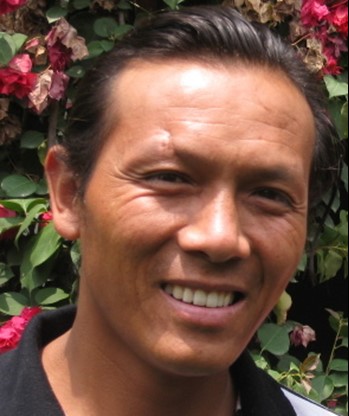
Pasang Tendi Sherpa is one of the company directors in Nepal and a mountain leader. He has been working with Adventure Alternative since 2005 and has made three climbs of Mount Everest with Gavin.
He lives in New York with his wife Sarasoti and their two children Jubilee and Elli Dolma, and he travels to Nepal during the trekking seasons and helps manage the company and run some treks and climbs.
He has had plenty of experience managing expedition and...
Cost per person is for a minimum group of two. We can arrange a private climb for small groups.
INCLUDES In-country logistics & support including airport transfers (Kathmandu transfers) if needed
Road transport to the start of trek
English speaking guide for trekking and climbing
Porters to carry main gear up to 15 kgs
Accommodation in lodges or tea houses, including three meals / day
Chulu East Peak climbing permit and local area permits
Group camping equipment for the base camp and any ropes that are needed
Staff insurances and food/accommodation allowances
Summit bonus for the climbing guide (circa £450)
EXCLUDES International flight to Kathmandu
Accommodation in Kathmandu – you can add this to your booking. Click here for details Kathmandu City Tours (we can organise this for you)
Travel and medical insurance – please ensure the policy covers non-technical trekking peak to the height of Chulu East (~6584m)
Personal expenses in Kathmandu and on trek including mineral water, hot and soft drinks, charging and boiled drinking water
Tips for the trek & climbing guide and porters – more information on figures here.
A deposit of £200 is required on booking to secure your place and we ask that the remaining balance (trip price minus the deposit) is paid in full six weeks prior to your departure.
Travel Insurance
Travel insurance will need to be purchased by each team member to cover all costs associated with medical, rescue, equipment, cancellations etc. This should be purchased as early as possible to ensure cancellation coverage in case of any issues arising that cause you to cancel your trip. The policy must be checked for validity in the regions through which we will be travelling and also for trekking/mountaineering to 6584m.
The Climb of Chulu East
The most commonly used route to the summit follows the North-East Ridge, first climbed in 1955 by a German expedition.
Rising high above the Manang Valley, Chulu East offers spectacular views of surrounding Himalayan giants, including Annapurna II, III, and IV, Gangapurna, Glacier Dome, Dhaulagiri, Tilicho Peak, and Manaslu. Reaching the summit requires some experience, though you do have time to learn and practice the skills required at base camp, as the route involves navigating fractured glacial terrain and steep scree slopes before ascending the main high summit ridge.
A second summit included on the Chulu East permit is Chulu Far East (6,060 m). Guide Jamie McGuinness describes it as “the Island Peak of the Annapurnas — straightforward yet enjoyable.” Both peaks share the same base camp, and many climbing groups choose to attempt Chulu Far East rather than Chulu East.
In addition to our standard ridge route, there are more technical alternatives. One follows the East Ridge (AD+), which requires establishing a high camp, while another ascends the South-East Ridge (D). Each of these routes uses a different base camp.
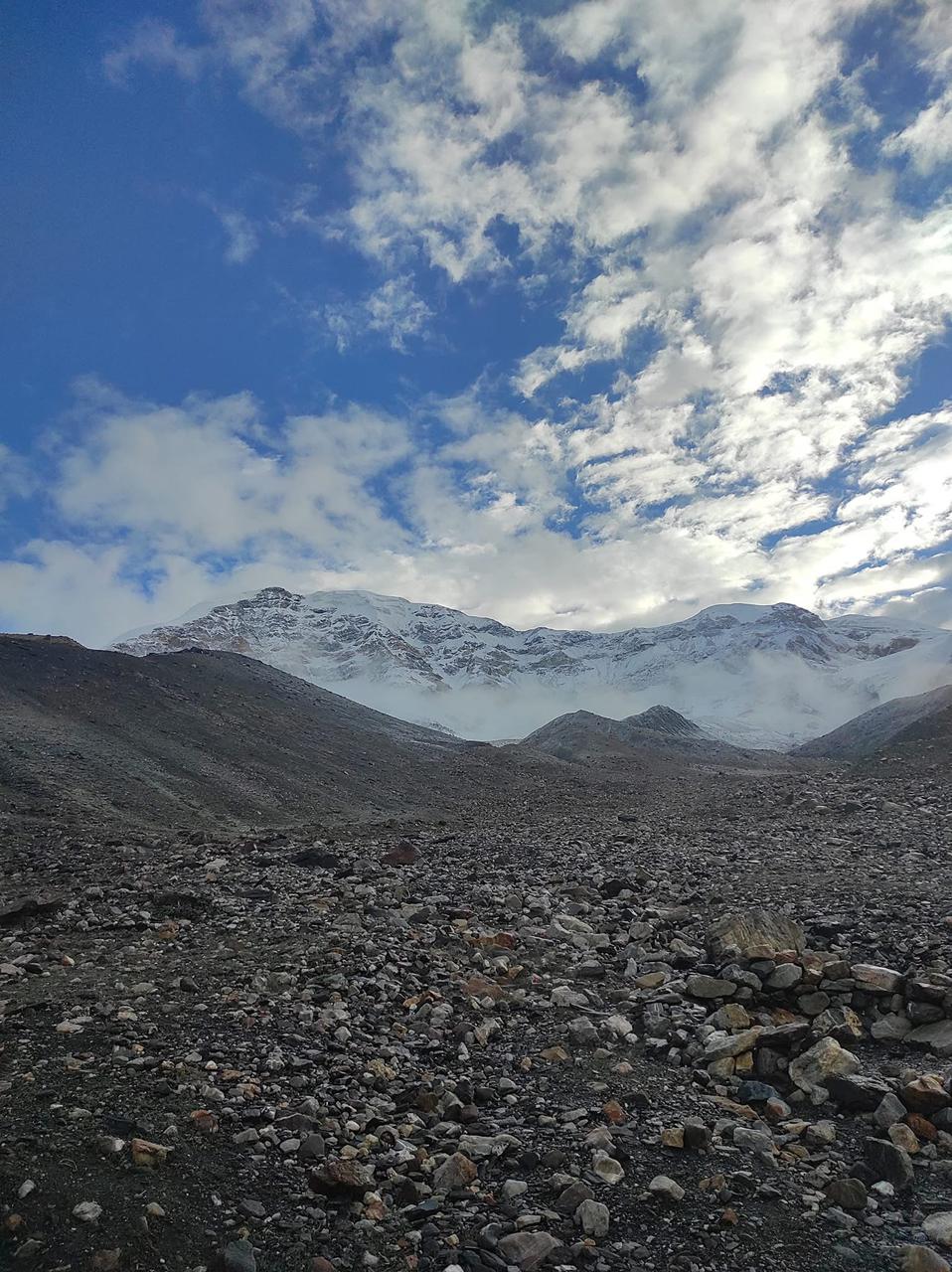
The view up from Base Camp
You need to take care of your hydration and maintain a slow manageable pace. The summit day route itself is a big day out and it will sap your strength. The high altitude does not just affect your strength, it affects your whole metabolism, so expect your appetite and sleep to be altered. Change your diet to a simpler one with less fried and fatty foods and more slow energy carbohydrates. Drink much more than usual, and get as much rest as you can.
You will need to be comfortable moving on a man rope, clipping in and maintaining an equal pace to everyone else on the line. You also need to be familiar with walking on crampons and being able to self arrest with your walking axe. We use a high camp for this peak so experience camping on the snow and keeping warm, dry, hydrated and well fed is important to ensure you’re in the best shape for summit day. We have plenty of time on the walk in, which is stunning, to practice the skills needed.
Reasons for people turning back include mainly: tiredness, lack of energy in the muscles and just plain running out of gas on the day, gastro-intestinal problems (often from several days before), and of course altitude sickness. Altitude plays a part in all of these issues, but the best advice is always to eat well, drink well, sleep well and go slowly.
Accommodation on the Chulu Peak Climb/Trek
Accommodation on the trek, before and after the climb, is in comfortable lodges run by local families, unless people specify a preference for tents. Each lodge has a central communal area with stove, while the bedrooms are unheated with two beds and mattresses, blanket and pillows. You will need to bring a sleeping bag. The lodges generally have showers which are powered by gas and some use the infamous ‘drop’ toilets, though most now have flush systems now.
Food on the trek is very good quality, and a mixture of local Nepali / Sherpa food and western recipes. The local Dal Bhat or Momos are an excellent choice and burgers & chips are a common meal in bigger villages on the main trail. You will find everything from beer to batteries to Mars bars available in the lodges and local shops along the trail a Nepal price guide can be found here.
At Chulu Peak base and High camp we will be in mountain tents usually sleeping two persons per tent. You should bring a 4 season sleeping bag and also a good quality sleeping mat. For lower down you may wish to use a sleeping bag liner to sleep in a open zipped 4 season bag, so that you don’t get too hot. All equipment can be rented very easily.
Training for Chulu Peak
We do recommend that you embark on a good fitness programme at least six weeks prior to your trip though, and one that builds up general stamina and specific leg muscle groups. There is nothing like hiking with a rucksack to train for this type of trip, so the best advice is to get out into the hills as often as you can. You are likely to carry about 10 kilos in your day sack so this is a good weight to work with.
If you are going to be using the gym then concentrate on step machines which work on the thigh and calf muscles, and try to build your heart rate up to 50% above resting rate. Any cardiovascular activity like swimming is good, but it must be added to other exercises to be effective. Exercise groups like body pump, Pilates and aerobics are all excellent preparation for a trip like this, especially those which work on core strength, balance and stability.
Previous winter walking and use of mountaineering equipment is a bonus however the guides will offer training whilst you’re trekking to the peak, so you will have time to learn and practice the skills needed such as clipping into a rope and walking safely with the group.
Summit Day on Chulu East Peak
Chulu East Peak Support Team
From your first enquiry and in the build up to your trip you’ll have direct access to experienced and professional guides and climbers for advice or to ask questions. Then, on arrival in Nepal, you’ll meet our operations manager in Kathmandu who organises all the staff, equipment, permits and hotel arrangements. He is also the main link between you and the UK office when you are in Nepal.
You will travel with our qualified guides who not only lead trekking groups but are experienced in high altitude expeditions.
Porters’ health and welfare is constantly monitored by local and UK trekking group leaders.
All the staff in our UK office have been to Nepal and we are qualified mountain professionals so you can chat to people who understand what it’s like to go up for the first time, before you go.
We provide insurance cover for all of our Sherpa guides and local staff in the event of an accident or need for repatriation.
The porters will carry your main bag up to a maximum weight of 15 kgs and cater for all the group needs, you will also have your guide and climbing guide with you throughout to ensure you are safe and happy.
You can speak directly with Gavin Bate about your proposed climb of Chulu East Peak and have the benefit of somebody who has climbed the mountain and who will go through the whole expedition from start to finish. In the office you will find friendly and knowledgeable staff who will give you the time to discuss through all your preferences and questions.
Chulu East Peak Emergency and Evacuation
Chulu East Peak is not far from the Annapurna town of Manang, which has a good connections for evacuating and also treating injured people. The Manang Aid Post (or Manang Medical Clinic), is operated by the Himalayan Rescue Association (HRA) and is staffed by volunteer doctors during the trekking seasons; it specialises in treating altitude illness and general trekking injuries for tourists and locals, providing medical care and rescue aid.
It is also possible to get a helicopter into some areas of the walk into Chulu East and to base / high camp but this is totally dependent on weather and visibility. In the event of an emergency the initial job of moving a casualty will be the responsibility of the team itself and the guide and porters and anybody else nearby. The task will be to move the casualty to the nearest safe place and then to a point where an evacuation can be made. Bad weather is the most common reason for delaying helicopter assistance so it’s important to acknowledge that there is a requirement for self-sufficiency and self-management in the mountains.
Another option for getting to lower altitude if someone is feeling ill is to rent a horse locally, which costs about $150.00 per day.
A helicopter evacuation can be organised through your insurance company but there will need to be some direct communication with the insurance company to open a case and explain the circumstances. This will require you to have your policy number, name and address and the date on which you paid for the insurance policy.
Chulu East Peak Kit List
Large duffle bag or rucksack & liner
45 Ltr day pack
Stuff sacks, waterproof, various sizes
Expedition Jacket, primaloft or down
Waterproof jacket and trousers, goretex or equivalent (softshell)
Gaiters
Trekking trousers and shorts, Tshirts, shirts
Fleece or woollen tops
Base layer tops and bottoms
Thin socks and thick socks
Warm hat, buff/balaclava, sunhat
Liner gloves, warm gloves, mitts
Sunglasses Cat 3 UV polaroid
Mountaineering boots graded B1 or B2 to accommodate crampons
Trekking boots and hut shoes
4 season sleeping bag (comfort temperature -20C) and compression sack
Thermarest or thick foam sleeping mat for camping only
Items Available for Rent from Adventure Alternative (Pick Up in Nepal)
Mountaineering Harness
Descender, ascender, karabiners and slings
Crampons
Walking Axe
Sleeping bag
Boots for the climb need to be of a type that will allow fitting of crampons. They also need to be warm and fitted well to your feet. You will need boots graded at least B1 for crampon use. If you are planning on doing more mountaineering in the future on higher or colder routes it may be worth investing in B2 hybrid or B3 rigid Plastic boots both of which will also be suitable. Full 8000m triple boots are not needed for this climb but could be used if you already have them.
Personal first aid kit contents
Paracetamol and Ibuprofen
Antiseptic Wipes, Adhesive Plasters, Blister Plasters, Zinc Tape
Antihistamine tablets
Sunblock Cream, Lip Salve
Water Purification Tablets
Loperamide tablets
Rehydration Sachets
Personal Medication as required, eg. Anti-Malarials, Asthma Inhalers, Insulin, Epi-Pen etc
Throat Lozenges
Crepe Bandage
Hydrocortisone Cream
Prochlorperazine tablets (for sickness/nausea)
Acetazolamide tablets also known as Diamox (altitude prophylactic; prescription required)
Note: you must check with your GP for your personal suitability to all medicines and their possible side effects and interactions. Please inform us of the details of all regular medication that you intend to use though the course of your trip and any relevant allergies and medical history related to them. You also need to check the requirements and regulations of the airline and all countries visited in relation to medications. For example; laws governing transport of some pain control medication and the need keep insulin at a suitable temperature, ie not in the cargo hold.
Do have a read of our various Blogs about treks in Nepal and also the ‘More Information’ section, both have tabs on this page and will answer every question you may have! We also have a lot of useful information on our Nepal Preparation page.
Frequently Asked Questions
How Difficult is Chulu East Peak?
Chulu East Peak requires some basic technical ability, however you will have time to learn and practice on the approach trek, and whilst at Base Camp. Skills required are using crampons, a harness, clipping in and out of a rope and being able to use your walking axe to self arrest. Walking with / on a fixed rope, navigating icy ridges, steep snow slopes, and potential crevasses. You will also have challenges with fitness and altitude. We recommend that you embark on a fitness plan well before arriving in Nepal and work on your general stamina, legs and cardio fitness. The approach trek itinerary and a good acclimatisation program is important so that you arrive at base or high camp in good condition, primed for your summit bid.
What Mountains Can You See from Chulu East Peak?
From Chulu East Peak you will be spoilt with jaw dropping views that take in: The Annapurna Massif, including: Annapurna I (8,091m), Annapurna II (7,939m), Annapurna III (7,555m), Annapurna IV (7,525m). Plus other major peaks such as: Dhaulagiri (8,167m), Manaslu (8,163m), Gangapurna (7,454m), and Tilicho Peak (7,134m). Alongside the local peaks of: Chulu Far East, Chulu Central, Pisang Peak (6,091m), and the Glacier Dome.
Then in the distance you have views of The Damodar Himal range, and on a clear day, views stretching as far as the Tibetan plateau.
This is considered one of the finest viewpoints in the Himalayas, providing an extensive panorama of the Annapurna region and beyond.
Here at Adventure Alternative we pride ourselves on making your adventure experience unforgettable. If you still can’t decide where to go, feel free to drop us a line, we would be happy to help you plan your perfect adventure.
Discover the very best of Nepal on this immersive 12-day journey, where vibrant culture, breath-taking landscapes, and unforgettable wildlife experiences come together highlighting the diversity and raw beauty of this Himalayan Kingdom!
Despite being the highest, Everest is not the most difficult of the 8000 metre peaks, but it does present certain unique challenges because of its superior height and nowadays the issues around over-crowding and impact on the environment. Climate change has had a big impact on summit windows. We provide a training and preparation programme, and an itinerary that provides a safe and optimal chance of reaching the summit.
The seduction of a trek to Everest base camp has long been known in adventure travel for its unmatched views of Everest, immersed in the peaceful world of Tibetan Buddhism and framed by the majestic Himalayas.
We’re dedicated to helping you make the most of your next adventure trekking holiday. That’s why we’ve created our travel blog full of in-depth trekking guides, travel inspiration and other fantastic information. Having done all of these climbs many times already, we want to pass on our wealth of trekking wisdom to you.